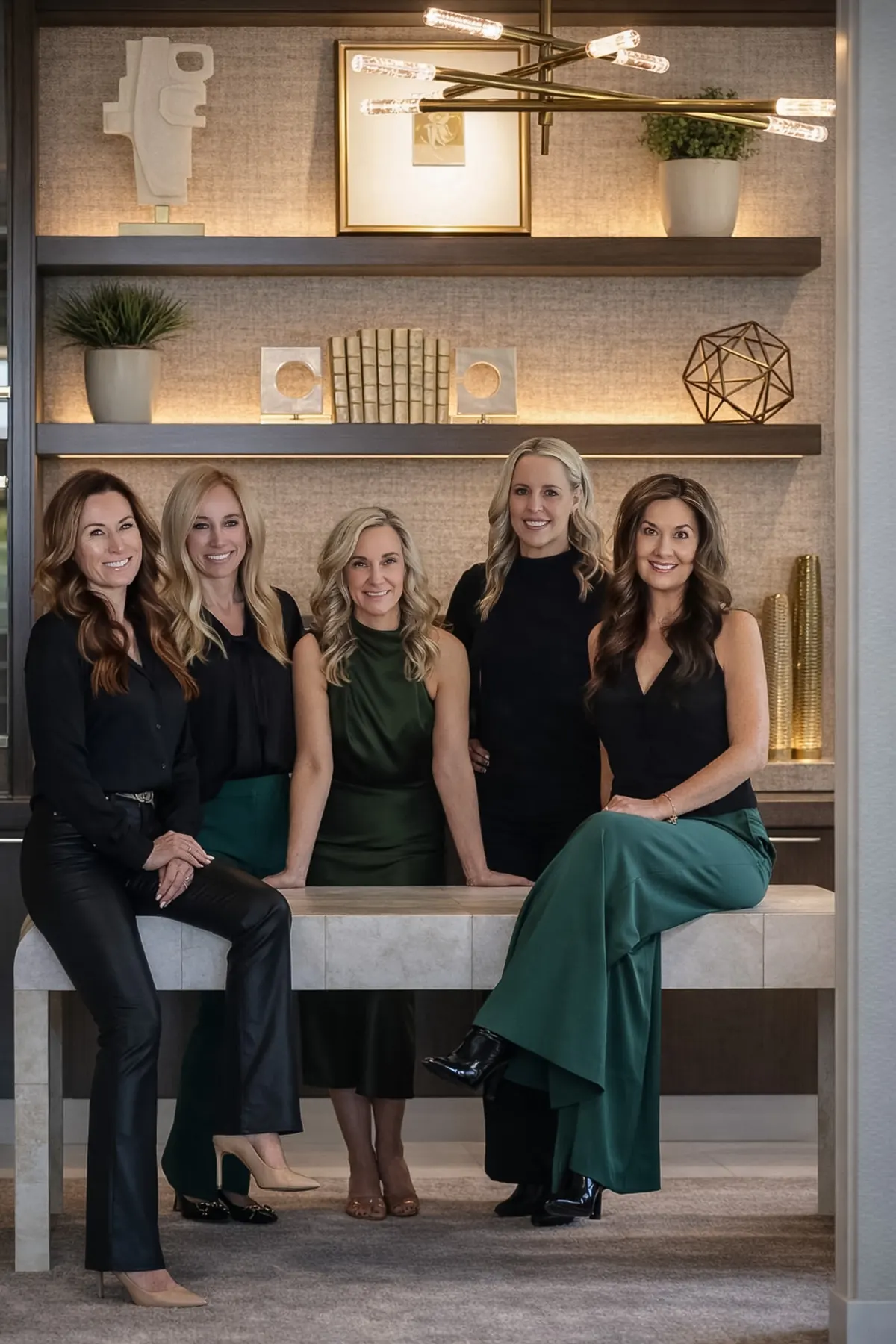
THE GOLDEN
STANDARD
The Las Vegas Tech Issue
Inside the Innovation Forum, where Las Vegas took up the questions ahead of CES 2027.
AI You Can Check
Receipts, error bounds, and the case for proof over promises.
Value Over Volume
What Porsche, Ferrari, Mercedes-Benz and BMW know about desire.
Inside Royilda & Co. · The Research Desk
Inside Issue 01
Contents
A quarterly of business and beautiful things, published from Las Vegas by the people who make them. Welcome to the first issue.
On the cover · The Real Estate Collective
Erin Ackerman · Erika Delk · Nichole Teter · Marian Miller-Curcuru · Alexis Michaud, photographed by Royilda & Co.
Royilda & Co. / GMS · Accolades
Google 5-Star Rating · Best of Las Vegas Nominated 2021–2026 · Digital Reference “Best Branding Consulting Services in the USA 2025” · Giggster Best Corporate Video Production 2023 · DesignRush Top Corporate Video Production · Featured on Redfin · As Seen on BluHorn TV · Expertise.com Best Marketing Agencies
The Letter
From the Publisher
Why a Las Vegas agency is publishing a magazine of record, and the standard it will be held to.
Every serious business eventually has to answer a simple question in public: what do you stand for when nobody is selling anything? This magazine is our answer.
GMS has grown into a house of connected disciplines, strategy, production, communications, technology, working for clients at the top of their categories: law firms, luxury real estate, hospitality, gaming, health, and the public square itself. The work travels. What didn’t travel, until now, was the thinking behind it: the research we do, the way we look at a photograph, a balance sheet, a ballot question, or a line of code and ask whether it is true, whether it is beautiful, and whether it will last.
So we are publishing. Quarterly. In these pages you will find our reporting from the rooms where Las Vegas is deciding its future, the Innovation Forum at The Venetian ahead of CES 2027, the candidate forums at UNLV. You will find essays on the economics of desire, written from inside the automotive and luxury worlds we shoot in. You will find a serious argument about artificial intelligence: that the question is not whether AI is impressive, but whether it can be checked.
One connected standard runs through all of it. It is the same standard whether the subject is a campaign, a couture sitting, a research monograph, or a public forum: do the work properly, show your evidence, and respect the reader’s intelligence.
Las Vegas is our stage and our subject, a city perpetually misread as surface, which underneath is one of the most instructive business laboratories in America. We intend to read it closely, and to be read closely in return.
Welcome to Issue 01.
Marlon A. Medina
Publisher, The Golden Standard · Founder & Marketing Director, Golden Medina Services
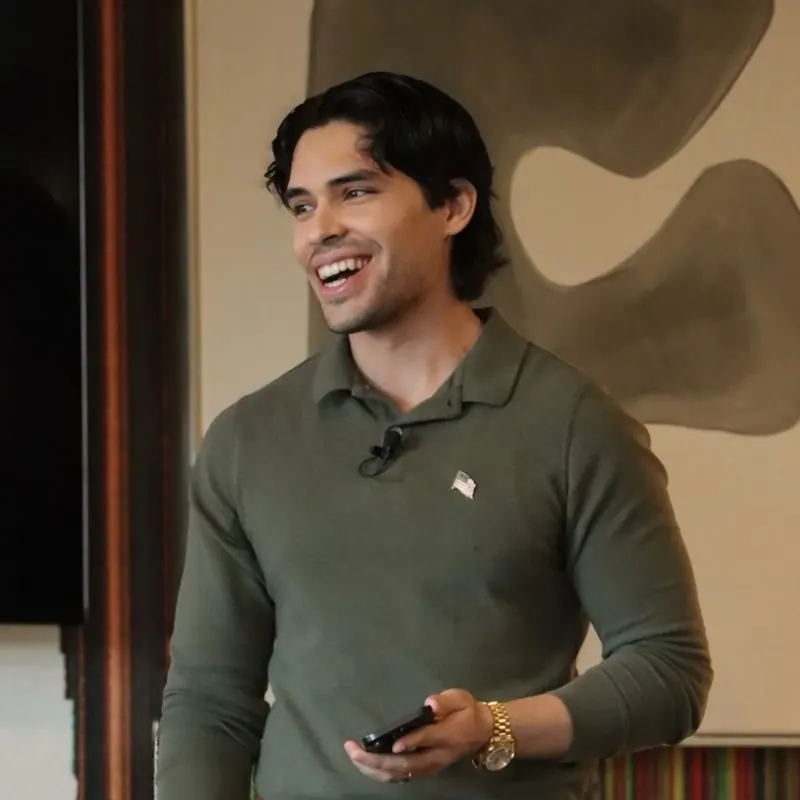
The PublisherThe publisher leads GMS’s research and editorial work alongside its client practice, and serves as a founding advisor at 0wav, the subject of our trust feature on page 7.
The Cover Story · Technology
The Las Vegas
Tech Issue
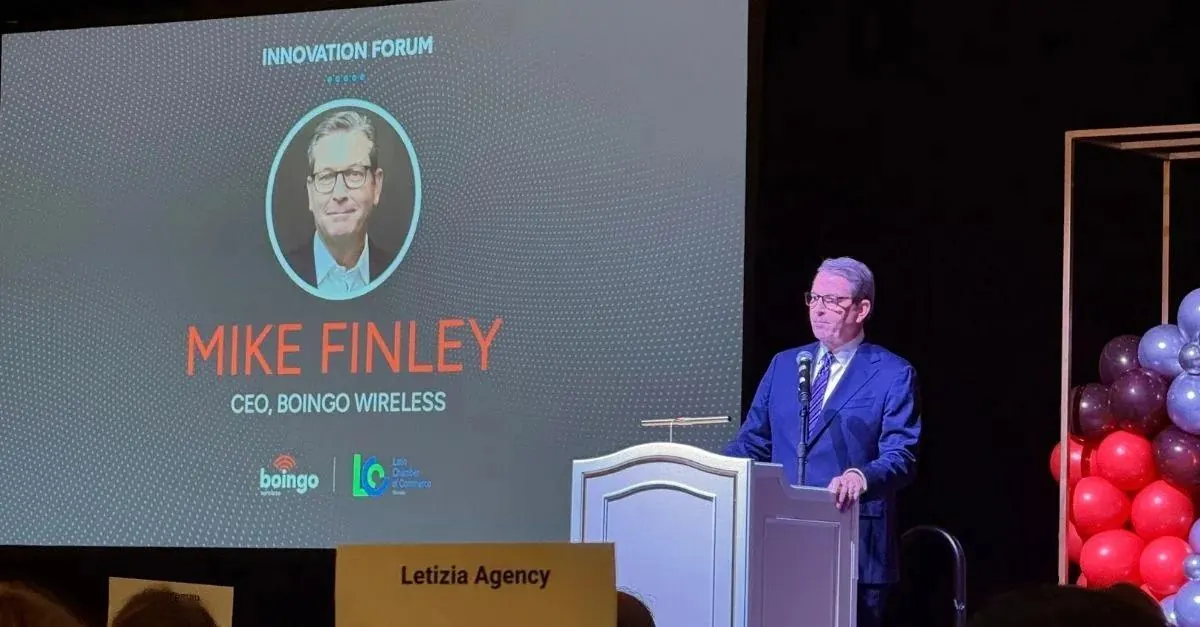
In a ballroom at The Venetian last September, the Innovation Forum took up the questions that will define CES 2027: connectivity, AI, and who gets access to both. We were in the room.
Cover Story · Part One
The intelligence gets the attention.
The infrastructure has to make it work.
On September 23, business leaders, technology executives, entrepreneurs and community stakeholders gathered at The Venetian Resort Las Vegas for the Innovation Forum: AI, Connectivity & the Future of Innovation, presented by Boingo Wireless and the Latin Chamber of Commerce Nevada. The event was designed around a broad question: what happens when artificial intelligence, connectivity and emerging technology move beyond the novelty phase and begin changing how companies actually operate?
Taken together, the forum offered something particularly relevant as Las Vegas prepares to host CES 2027 from January 6–9: a look at what happens after new technology leaves the convention floor and enters the businesses and communities expected to use it.
One of Modoff’s more important observations: the impact of AI looks very different depending on where a company sits in the technology stack.
Generative AI and increasingly capable agents may put real pressure on software businesses built around narrow consumer functions. But semiconductors, networking equipment, communications infrastructure and other hardware do not necessarily become less valuable as AI improves. In many cases, AI creates additional demand for them. Every increasingly capable model still requires computing power. Every connected device still depends on networks.
Modoff speaks from the stack itself: before his current work with Summit Partners, he led strategy, M&A and venture investments at Qualcomm across mobile, automotive, IoT, AI, AR/VR and networking. Qualcomm is already confirmed as a CES 2027 exhibitor in the Convention Center’s West Hall, a sign of the forum’s central idea: AI is not one product category anymore. It is a layer running through nearly every other category.
That makes Boingo’s role in the forum particularly appropriate. Mike Finley leads a company whose business is the infrastructure that lets connected technology function across large, complicated environments, distributed antenna systems, Wi-Fi and private networks serving transportation, venues, hospitality and government. Las Vegas has already served as one of Boingo’s testing grounds: during CES 2024, the company announced the first live Wi-Fi 7 network deployed at a public venue, at the Las Vegas Monorail’s Boingo Station by the Convention Center.
Wi-Fi 7 is built for exactly the world AI is creating: greater capacity, lower latency, and better performance in dense environments where thousands of devices compete at once. CES 2027 devotes an entire technology category, Next G and Wireless, to how advanced connectivity is changing enterprises and connected environments.
Continue in this issue
The forum kept circling one problem: proof. AI You Can Check, the trust feature, takes it up on page 7. The work itself is gathered in Selected Work, from page 30.
Cover Story · Part Two
Another theme ran through the day: AI is not an industry. It is a capability that can be inserted into other industries. Modoff pointed toward communications, medicine and drug discovery as fields where AI accelerates existing work rather than simply replacing it. That is consistent with what CES itself is emphasizing for 2027, AI already affecting productivity, customer experience and medical advancement, with digital-health programming spanning telehealth and connected care.
Workforce readiness returned again and again. The comparison made in the room was straightforward: learning to work with AI may soon feel less like a specialized discipline and more like learning to use a computer or a search engine. Not everyone needs to become an AI engineer. But professionals increasingly need to know what these systems can do, when they are appropriate, where they fail, and how to supervise their output. That emphasis is already turning into programming: the Latin Chamber’s LCC LEADers AI & Automation Accelerator, bilingual training for Nevada entrepreneurs and business leaders, began September 29.
Some of the forum’s most practical discussion had little to do with humanoid robots. It was about the back office. The Latin Chamber shared the example of a local tire business that had struggled with inventory management; after adopting tracking software, it gained clear visibility into where product sat and cut the problems an inefficient manual process created. That kind of use case may never generate a CES keynote. It may matter considerably more to the average small-business owner, whose company may have one person doing work a corporation staffs with whole departments. AI, used well, gives that workforce leverage, not a replacement.
Security was the least glamorous conversation, and perhaps the most important one. The forum did not present adoption as risk-free: the more AI can do, the more consequential its permissions become, what information is shared, what an agent may access, where a human remains responsible. The lean in the room was toward controlled adoption: use the technology, and build governance and human oversight around it. It is the same conclusion our own practice has reached, and the subject of this issue’s trust feature, on page 7.

The applied layerMost Las Vegas businesses aren’t building foundation models. They’re asking how to create content without making it generic, automate the repetitive without losing the human, and use AI without exposing client information.
The Trust Feature · Artificial Intelligence
AI You
Can Check
Every AI answer sounds confident. Almost none of them can prove anything. A Las Vegas-adjacent venture called 0wav is building the missing layer: a signed receipt for what the machine was given, what it said, and how often it is allowed to be wrong.
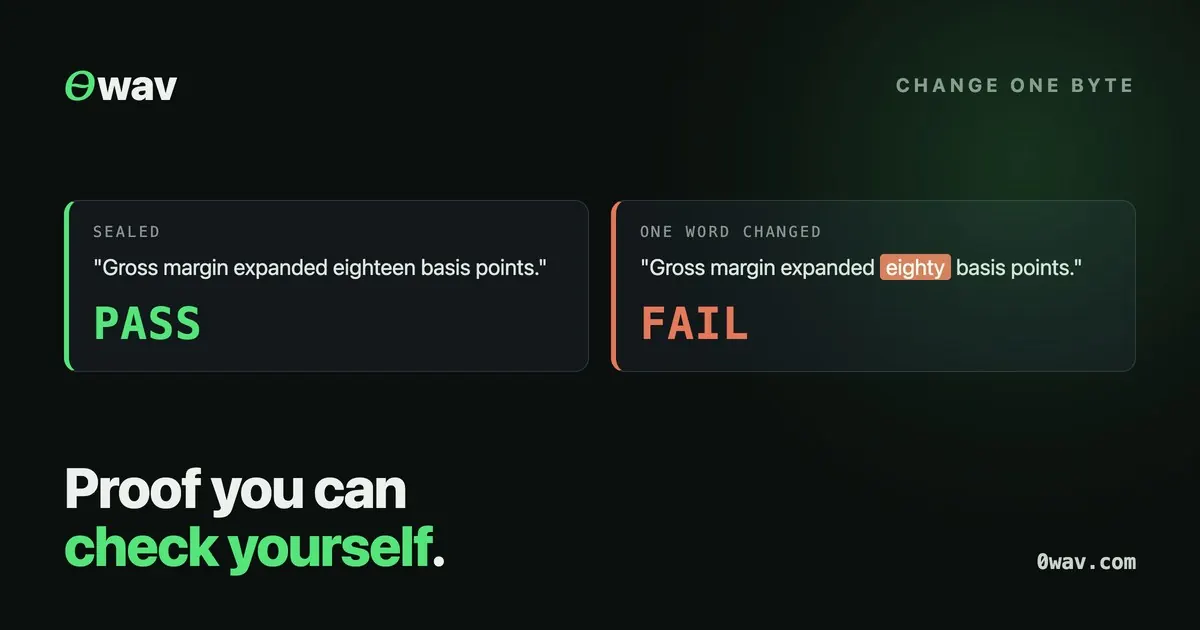
The whole thesis, in one cardChange one byte of a sealed record and the receipt fails. That is the product: not trust in a company’s say-so, but proof anyone can re-check.
RAW · UNANIMOUS · VERIFIED
The three tiers of a 0wav receipt, detailed on page 8.
The Trust Feature · How It Works
Anatomy of a Receipt
Every AI answer produced through 0wav ships with a signed receipt, sealed in a .0wav file. The receipt doesn’t ask you to trust the answer. It shows you the answer’s paperwork, and lets you verify it yourself, off-grid: no cloud, no account, no network.
Raw
A single engine’s answer, sealed. The floor of the system: even the quickest output carries its paperwork.
Unanimous
Independent engines must agree before the answer earns the tier. Disagreement is data, not a rounding error.
Verified
The full chain, sealed input, cross-checked output, stated error bound, human adjudication on record. Court-grade.
Two markets explain why this matters. The first is courts, audits and compliance, what 0wav calls chain of custody for the spoken word, where a transcript or an AI-assisted record may one day have to survive cross-examination. The second is quieter: off-grid and village operators, people who need to verify what a system said without phoning a data center to ask permission.
Our publisher serves as a founding advisor at 0wav. His position, shared with his business partner in the venture, is the editorial stance of this magazine’s AI coverage: guardrails and protective measures for small businesses and consumers are not friction on innovation, they are what makes innovation safe to adopt. The company’s own house line says the rest: “We certify what was observed. We never certify what it means about a person.” 0wav is patent-pending.
The Trust Feature · The Essays
Proof, Not Promises
The Provenance-Efficiency Paradox. In our reporting from CES 2026, we argued that media integrity is becoming a currency: the easier synthetic content is to produce, the more valuable verifiable origin becomes. Efficiency without provenance is a liability wearing a productivity costume. Every newsroom, agency and court that adopts AI output without a chain of custody is borrowing against a credibility account it will eventually have to settle.
The Unseen Crowds. AI characters are already blending into real footage, background performers who were never on set, in a city built on spectacle. The ethical question isn’t whether the technology works; it does. It’s whether the audience is owed disclosure, and whether the producer can prove, later, exactly what was real. A receipt answers the second question. Only policy answers the first, which is why we keep arguing for both.
Credibility, and the cost of chasing trends. Tools change every quarter; the model that wins a task today is surpassed within months. What compounds is not platform fluency but judgment: knowing when an output needs supervision, when it needs a receipt, and when it shouldn’t be used at all.
From the Bench · The AI-Fake Question
At October’s Across the Aisle Vol. 5 forum at UNLV, the Municipal Court panel was asked the question now arriving in real proceedings: what does a judge do when someone claims a recording of theirs is an AI fake? Judge Matt Walker answered first:
“As judges we are limited to what’s being presented by the parties.”
Judge Matt Walker, Sitting Judge, Municipal Court Dept. 1
Amanda Pellizzari, an 18-year criminal defense attorney running for Municipal Court Department 1, went to the burden of proof:
“They have to authenticate the video. They have to prove that the video is in fact what it says that it is.”
“Burden is never on the defendant.”
Amanda Pellizzari, Candidate, Municipal Court Dept. 1
Nobody on the panel pretended the law has caught up to the technology. Which is precisely the 0wav thesis, stated in courtroom terms: authentication is a receipt problem. A recording that arrives with a sealed, re-checkable record of its origin doesn’t ask a judge to take anyone’s word for it.
Informational only. Featuring a speaker does not imply GZLV endorsement. Quotations are verbatim from the forum recording’s transcript, the Gen Z Coalition of Las Vegas livestream of Across the Aisle Vol. 5, also posted to Facebook.
Notebook · A Dispatch from the Field
The Builders’ Question
LAS VEGAS, Spend an evening in a room full of this city’s AI builders and the first thing you notice is how little the systems resemble each other. At the Las Vegas AI Builders meetup at TensorWave HQ last month, builders described products meant to work with government; banking and finance products; MIT research enthusiasts showing what the labs are cooking; and software capable of running multiple AI programs at once, including out-of-the-box tools built, without embarrassment, to compete with the SaaS and agency platforms the rest of us pay for monthly. GoHighLevel was the name used as the example. It was not used reverently.
Because the recurring claim in the room, made by people demonstrating, not pitching, was this: paid SaaS products can now be recreated entirely with AI. Not approximated. Recreated: the dashboards, the pipelines, the automations, rebuilt by a small team directing models, at a cost structure the incumbents were never designed to survive.
I did not leave with an answer, and I am not going to manufacture one here. I left with the question, and I offer it as food for thought: what do SaaS products actually do to stay competitive before people simply vibe-code them out of existence?
The honest version of that question has to be asked from inside the house, so let me ask it that way: GMS itself runs client operations on platforms like HighLevel. Our clients’ pipelines, calendars, and campaigns live there. If a determined builder can recreate the tool, what exactly are we paying for, the software, or the accumulated trust, data, support, and switching cost wrapped around it? Every agency, every operator, every software company in this city should be able to say which one it is. Most, I suspect, have not yet had the evening I just had.
The builders in that room are not waiting for permission, and the technology is not moving at the speed of anyone’s comfort. What they cannot recreate overnight is proof, a verifiable record of what a system did and whether it can be trusted. When anyone can rebuild the tool, that may be the only moat left. It is, at any rate, the one this magazine keeps writing about.
Filed from the meetup floor. Observations attributed to the room; no builder is quoted by name, because none was offered for print.
The Luxury Feature · Automotive
Value Over
Volume

Four marques spent the better part of a century learning how desire is actually built: scarcity, consistency, discipline. What Porsche, Ferrari, Mercedes-Benz and BMW know, and what every specialty brand in Las Vegas should steal.
Luxury · The Playbook
Desirability is a discipline,
not a launch event.
In the specialty equipment world, attention is the scarcest resource on the floor. At shows like SEMA, thousands of brands compete for the same buyers and the same coverage. The ones that cut through rarely win by listing the most features. They win by controlling desirability, and four of the most studied luxury automotive brands have spent decades refining the same core principles: protect exclusivity, own a clear narrative, and treat branding as long-term equity rather than short-term volume.
Porsche has built its modern commercial identity around a simple idea: value over volume. Founded in 1931 and a carmaker since the 356 of 1948, the company repeatedly chooses higher average transaction prices and deeper individualization over chasing unit growth. The crest that first appeared in 1952 has received only careful updates. That restraint is itself a marketing statement, the brand trusts its history enough not to reinvent it every product cycle.
Ferrari operates on a principle still treated as doctrine in Maranello, where Enzo Ferrari founded the marque in 1947: sell one car less than the market demands. Production stays constrained. Access to the rarest models is managed through relationship history. Residual values stay elevated, and ownership feels like membership. The prancing horse has remained essentially unchanged for decades, reinforcing continuity at a glance.
Mercedes-Benz carries the heaviest historical weight of the four, the line runs back to the Benz Patent-Motorwagen of 1886, the first automobile, and has deliberately shifted emphasis toward its highest-margin products while managing the broader range more carefully. Its design language has moved toward clearer identity, so a Mercedes is instantly readable again. The lesson is calibration: luxury signaling works best when it is precise.
BMW, founded in 1916, has held a single clear promise for more than fifty years. That consistency allowed the brand to expand into entirely new categories while still owning the idea of driving pleasure. A strong, sustained line compounds equity in ways that frequent tagline changes never will.
These companies operate at a different scale than a SEMA exhibitor or a Las Vegas personal brand. The principles still travel. Scarcity and individualization protect perceived value. Visual and verbal consistency compounds over time. Media coverage follows strong narratives more reliably than feature lists. And brand equity is a strategic asset that must be defended most carefully during growth phases, exactly when the temptation to discount it is strongest.
At SEMA, the booths that generate lasting coverage rarely have the most product on display. They arrive with a coherent story, a clear identity, and the discipline to protect it. Luxury branding at this level is not about being the loudest voice in the room. It is about becoming the brand people still talk about after the lights go down.
Luxury · The Plates
Rooftop, After Hours
Two rooftop productions, two different briefs: an automotive shoot for BMW USA on the GMS rooftop at Hughes Center, and a personal-brand sitting for a longtime client on the Bellagio rooftop, her own Mercedes-Benz as the second subject.

The frontal argumentA BMW 430i Coupe in Alpine White, produced for BMW USA and shot low and square-on, on the GMS rooftop at Hughes Center under an overcast sky. The G22 coupe’s oversized vertical kidney grille does the talking, flanked by LED headlights with angel-eye daytime running lights; the frameless doors stand open to widen the stance, and the desaturated grey grade is set against the Alpine White. Shot by Golden Medina Services.

Setting as signatureJillian Batchelor, top-producing Las Vegas realtor and longtime GMS client, across the hood of her own white Mercedes-Benz S 580 on the Bellagio rooftop, the Paris Las Vegas tower behind her: a pearl-embellished sheer top with fitted white pants. The car is the shoot’s second subject, the W223 flagship sedan, twin-turbo V8, on black wheels. Photograph: Royilda Medina.

The window frameJillian again, leaning from the window of the same S 580 in a soft green satin blouse, hair in voluminous curls, glass towers behind her. Same client, same flagship, second register: the personal brand at ease inside the car that carries it. Photographed by Royilda & Co., Bellagio rooftop.
Style · The Luxury Sittings
The Discipline of Dress, I

April McClellan · The lead frameApril McClellan, in the ivory zip-front blazer. From the Royilda & Co. portfolio.
The lead sitting, with April McClellan, is a single-color study: an ivory blazer worn over an ivory square-neck top, so the outfit reads as one unbroken column of light. Nothing in the tailoring competes with that column. The fabric is smooth and matte, with no visible grain, and the only hardware is the zipper itself, a single vertical line of metal running the length of the blazer where buttons or a belt would normally break the surface. The color around her does the opposite work. The room behind is warm: amber pendant lights dissolved into soft circles, brick, bright window glass. Her hair, worn long in auburn waves, is the frame’s one saturated note, and it is what separates the ivory outfit from the ivory light. The background is a choice, not an accident: a real interior thrown fully out of focus lends the portrait warmth and depth while leaving the sitter as the only sharp thing in it.
Ashley Henderson’s sitting is a study in texture. The blazer is a grey-black herringbone, a broken chevron weave you can read at arm’s length, worn over black with one small gold note showing at the neckline. The weave is the pattern, so nothing else in the outfit needs to be: the fabric carries the frame by itself. Her hair answers it, black waves with a smooth finish, and the backdrop is a dark mottled studio grey with no environment in it at all, so the eye stays on the cloth and the face. Arms folded, gaze direct, the palette closed down to charcoal, black and skin, with the gold accent as the single warm note.

Ashley Henderson · The second studyAshley Henderson, in the grey-black herringbone blazer. From the Royilda & Co. portfolio.
Style · The Luxury Sittings
The Discipline of Dress, II
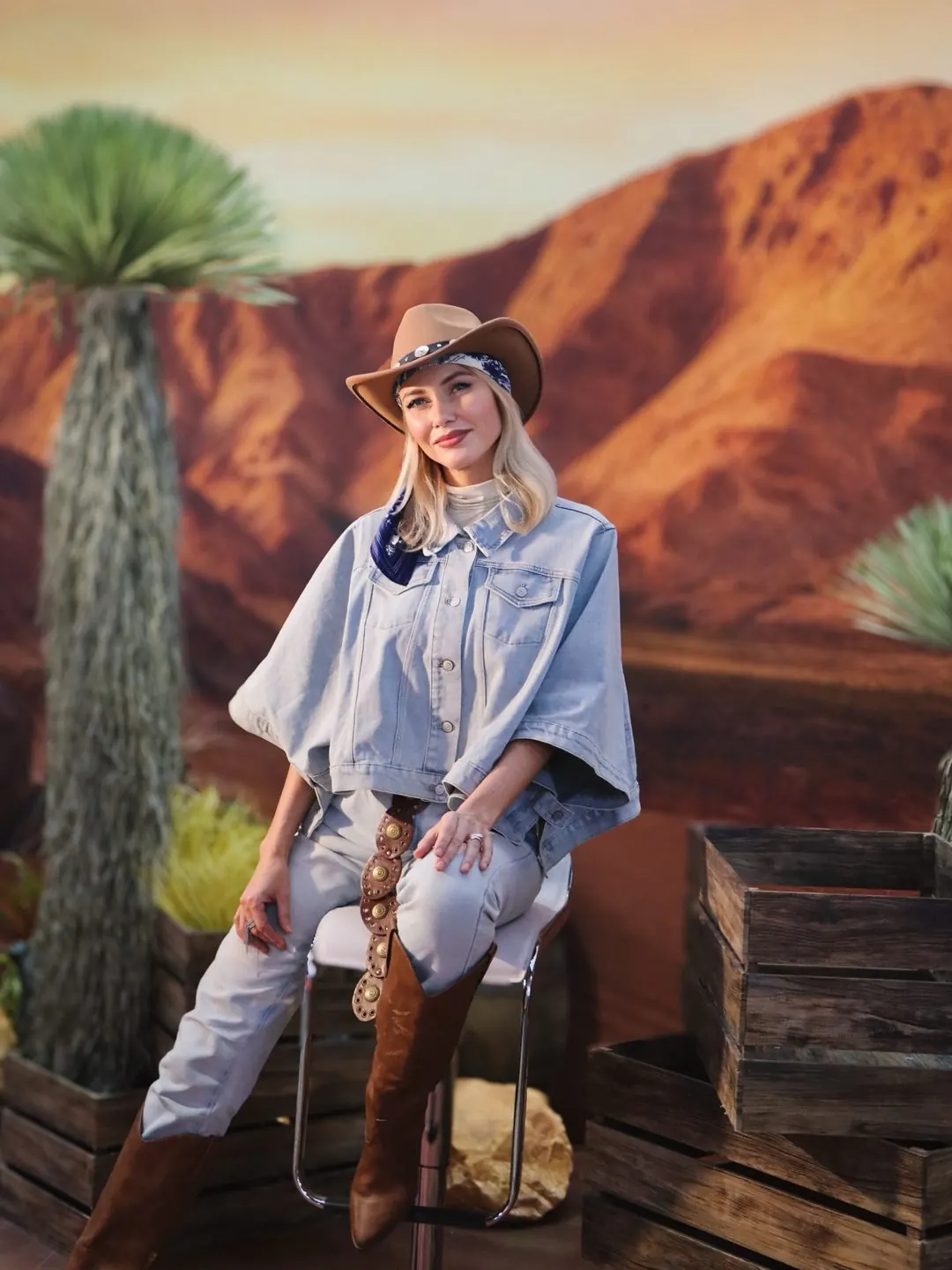
The western editorialCaught mid-pose in a staged desert set: the camera holds the moment as she works the built landscape. The set, and the instant, are the frame’s subjects.
The western sitting is a study in pale against rust. A washed-denim cape jacket, soft in the drape and oversized in the cut, is worn over a cream turtleneck and white denim, a deliberately light outfit set against red rock and desert sky. None of that landscape is real, and that is the production story of the frame: the desert is a staged set, built scenery that the camera reads as open country. The bridges between the two temperatures are leather: a tan hat and a tooled belt with a concho buckle at the waist. Two weights of denim twill carry the texture, the jacket’s looseness against the jeans’ structure, with suede in the hat and the rough bark of the Joshua tree as the frame’s one natural roughness. Nothing in the frame was found. The place was constructed. The look was not this studio’s to choose; she was caught mid-pose inside the built desert, and the photograph’s work is to hold the two together until they read as one country.

Chris NajarroPhotograph © Royilda & Co. Shot at the former GMS content studio, located at Hughes Center.
Navy is the discipline here. A deep navy suit over a dark shirt patterned in small dots, worn open at the collar, no tie. The suit's cloth is smooth worsted, so the shirt does the textural work, and the choice was the client's own: dots small enough to read as tone across a room become pattern up close, a quiet way to put personality inside a formal frame. The personal notes sit at the wrist. Beaded bracelets alongside the watch, once unthinkable with a suit, are part of a broader return of men's bracelets to business dress, worn here without apology. A phone in his hands is the frame's one working object. The room itself is the production: the executive office he appears to sit in is the former GMS content studio, located at Hughes Center, dressed to read as one and lit cinematically, a studio made to pass for the corner office, and passing.
Style · The Luxury Sittings
The Discipline of Dress, III

The evening registerA birthday celebration outside Toca Madera at CityCenter, Las Vegas; the birthday girl wears the pink, at center. Photographed full-length. From the Royilda & Co. portfolio.
The frame is a birthday celebration, photographed outside Toca Madera at CityCenter, and it sets three textures side by side, letting the shared setting hold them together. On the left, a strapless white feather top, soft and matte, its fine plumes breaking the outline of the bodice, worn with high-shine white trousers that reflect the light the feather absorbs, a wide tan belt with an oversized gold buckle at the waist, and a gold chain at the neck. In the center, the birthday girl, in the frame’s one saturated color: a strapless hot-pink dress built from tiers of ruffled tulle, each layer translucent, the volume gathered in by a jeweled silver belt, her dark hair worn in long waves. On the right, a sleeveless silver sequin dress, every sequin a small hard reflector, worn with a narrow patterned belt, a turquoise pendant, and a pearl bracelet. Feather, ruffle, sequin: air, layer, shine. Behind all three, a wall of dark greenery, eucalyptus, fern and hanging foliage under warm event light, closes the palette down so that white, pink and silver are the only arguments in the picture, and it makes three very different dresses read as one celebration.
The lightest palette on the page, and deliberately so: a pale blush polo against soft daylight and greenery, worn with stone trousers and a brown leather belt. The polo’s fine knit is the texture, everything else is smooth and unworked, because this sitting’s register is ease. The one ornament is architectural, the carved openwork screen he leans against, whose pattern stands in for everything the outfit declines to do. Where the other sittings close down and formalize, this one opens: daylight, a smile, an arm resting on the frame of the screen. Same discipline, off duty.
Read together, the sittings in this feature make one argument: color held to a decision, texture doing the work of pattern, and backgrounds chosen as carefully as the clothes, never simply found.
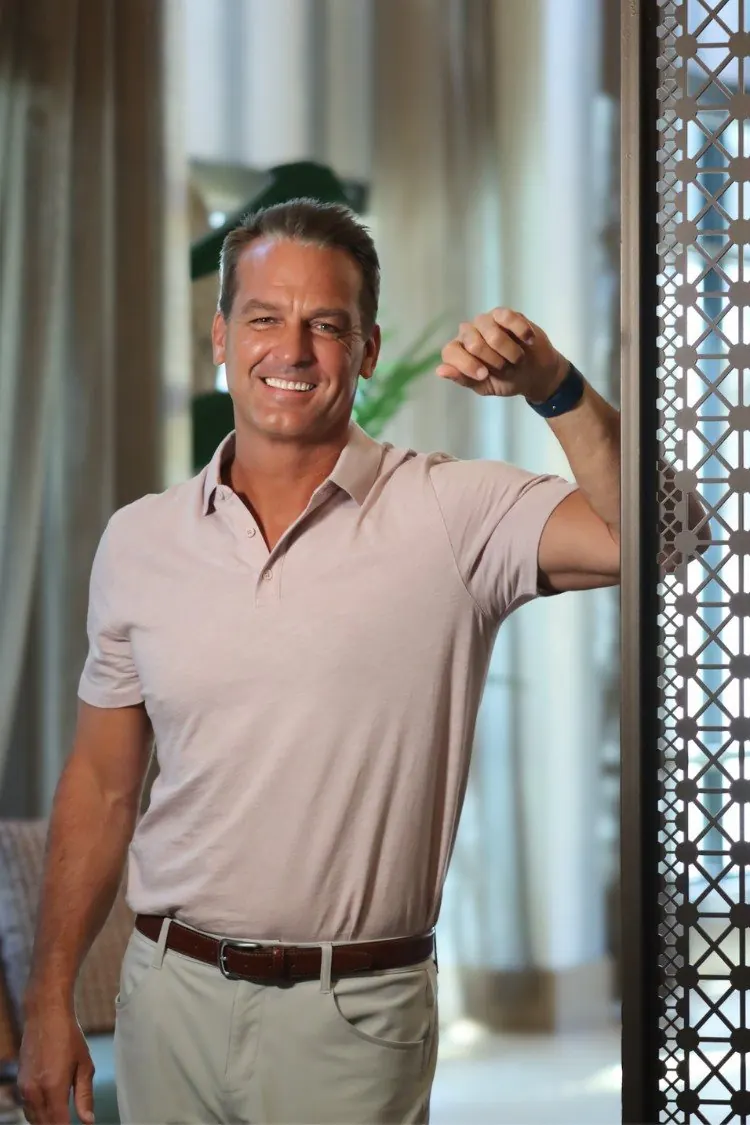
Andrew JaroszFrom the Andrew Jarosz Luxury Shoot, thegoldenmedina.com.

The Fashion Editorial · WPPI
Red, in Three Acts
From the WPPI high-fashion sessions in Las Vegas, photographed by Royilda & Co.: couture shot close, with the construction of each garment as the subject.
Act I is texture at close range: glossy scarlet satin with a puffed sleeve, a sheer red lace overlay at the shoulder, a matching satin glove, and, above a blunt black fringe, a crown-like headpiece encrusted with stones and sequins in black, green and amber. The background stays a deep, smoky red, with haze drifting across the frame, so nothing competes with the garment’s own shine.
Fashion Editorial · WPPI Sessions
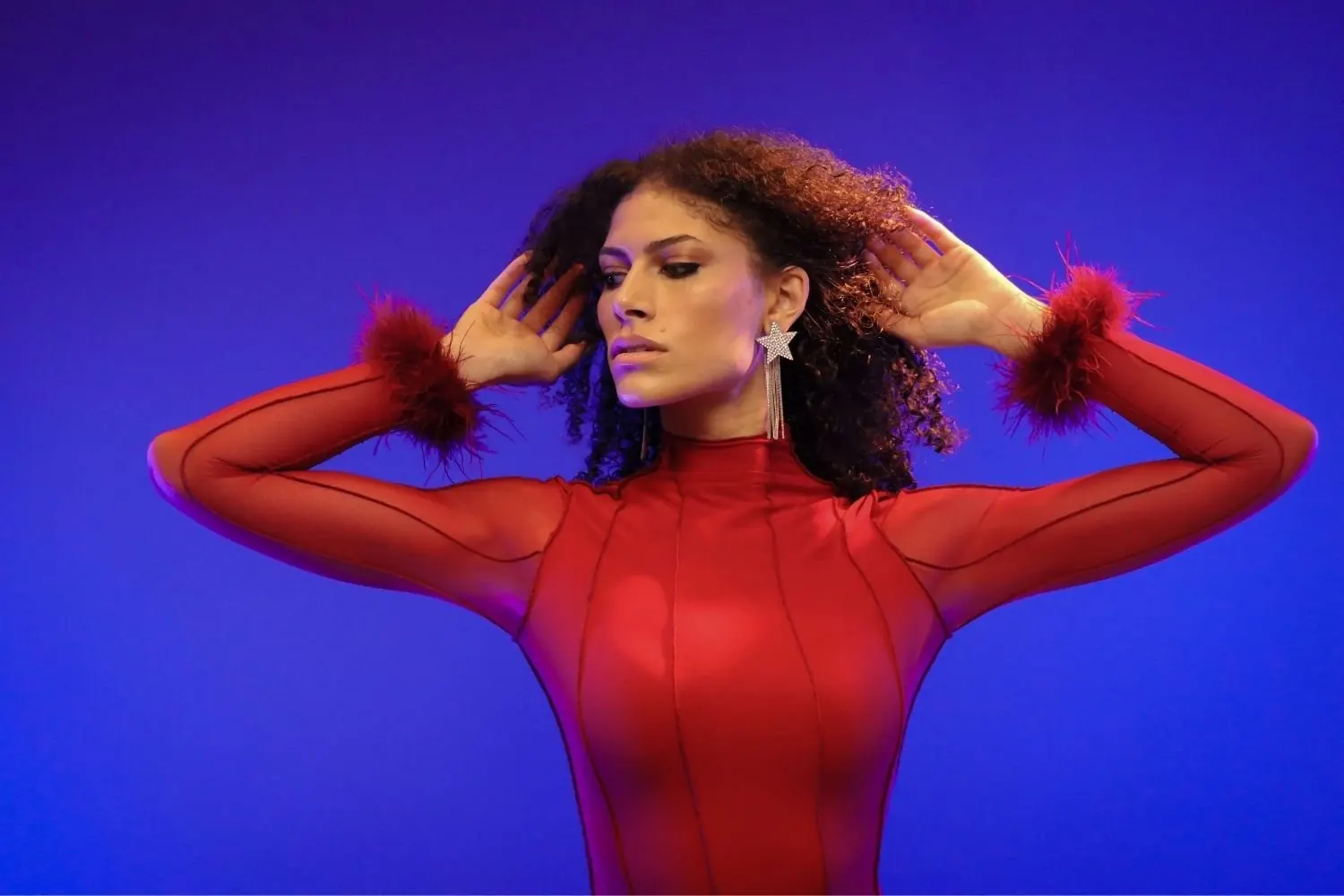
Act II, The complementA scarlet high-neck dress against a saturated cobalt-blue backdrop, the warmest color in the issue set against the coldest. The bodice is smooth and close-fitting with a satin sheen; fine vertical seams run its length and continue down sheer long sleeves, so the construction lines stay visible even where the fabric turns transparent. The cuffs break the smoothness: deep red feathers at each wrist. Her one piece of jewelry is a star-shaped crystal earring with a fine chain drop, and her dark curls are lifted by both hands, which is what puts the feather cuffs in the frame.
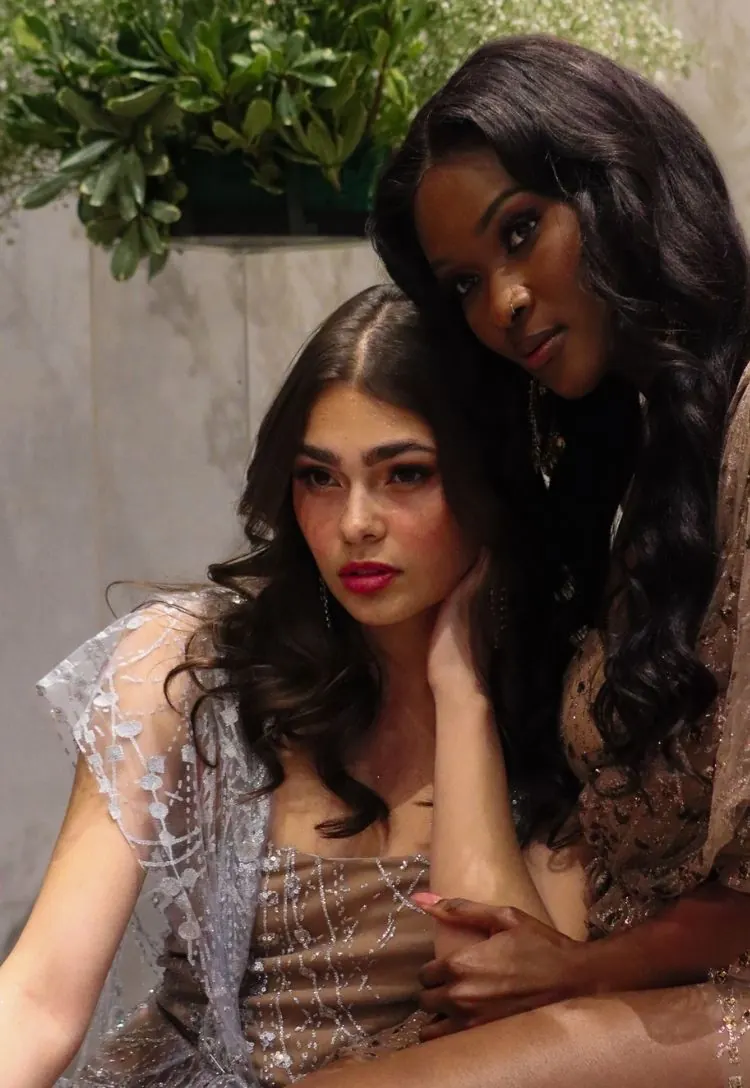
Act III, The duetTwo models in beaded evening gowns against a pale stone wall, with green succulent planting above them. The seated figure wears a taupe satin gown under a sheer overlay embroidered with silver-white beading in a vine pattern, its short cape sleeve falling over one shoulder. The standing figure, in long black waves, wears a bronze-toned gown with denser beadwork across the bodice and a sheer overlay of its own. Where Act II is one color at full saturation, the duet is metallic neutrals at low contrast, and the beadwork, not the color, carries the light.
The two frames make the same point in opposite palettes. Act II builds its effect from seaming and saturation: red engineered close to the body, finished with feathers, and set against a blue that makes the red hotter. Act III builds it from surface: thousands of beads and a layer of embroidered sheer over satin, in tones close enough that the eye reads texture before it reads color. In both, the background is a single decision, flat saturated color in one, pale stone and green in the other, chosen so the garments are the only event.
Photography, Royilda & Co. for GMS · WPPI high-fashion editorial sessions, Las Vegas
Fashion Editorial · The Team Frame
Black, Worn as a House Style

Beauty Goals LVFive women in coordinated black against a dark interior, glass and soft bokeh light behind them. From left: a long-sleeved black velvet dress with patterned tights; a black one-shoulder mini worn with very long blonde waves; a black-and-white woven tweed dress with buttons and a pleated skirt; a leopard-print strapless top with a black slit skirt; and a black velvet strapless mini with a fine jeweled necklace.
Group portraits usually solve styling by matching everyone. This one holds only two things constant, the color and the level of finish, and lets everything else vary. The textures do the separating: matte velvet against woven tweed, the flat print of the leopard top against smooth satin and hair worn long and straight or in waves. Even the hosiery is part of the styling, patterned tights on the left, sheer black through the middle and right.
One warm break is allowed: the deep red tights under the tweed dress, the single note of color in the row, placed at the center of the frame. It works the way the gold note worked in the herringbone sitting on page 14, because everything around it refuses to compete. Five separate outfits read as one team, which is what a beauty brand sells: luxury here is not a price point, it is decisions made on purpose, and visible.
The Legal Feature
The New Face of
Law Firm Marketing
Television did not leave Las Vegas law. It split into layers. The firms growing now run all of them on purpose: broadcast features that confer credibility, streaming that aims the same screen household by household, and owned content that keeps working long after the segment airs.
The Evidence, From His Own Pages
Start with broadcast, because he did. In October 2026, Alexander appeared on KLAS Channel 8’s Las Vegas Now beside Marine Corps Reserve representatives, not in a commercial break but as a first-year local sponsor of the Las Vegas Toys for Tots campaign, his West Charleston office announced on air as a toy drop-off location.
Weeks later, at the Courage Ball for the Crohn’s & Colitis Foundation, his firm bought the evening’s Spotlight creator-content package at auction, a law firm purchasing creator media the way other firms purchase billboards. Between the two, his blog did the compounding: the scholarship, the giveaways, the practice explained.
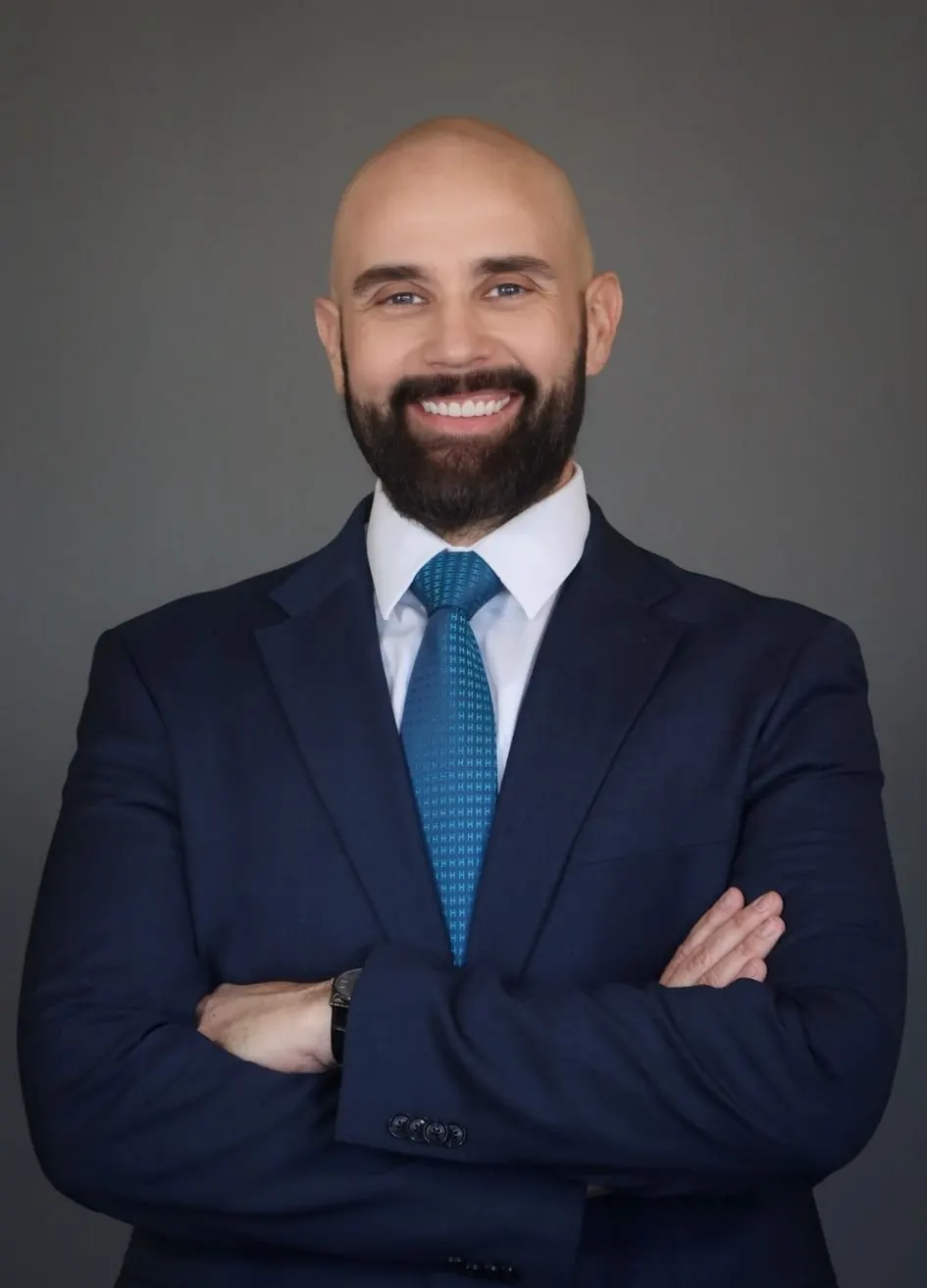
Ryan AlexanderThe solo executive portrait from the firm’s GMS sitting, the frame the firm itself runs on billboards across Las Vegas. Photograph © Royilda & Co.
The Firm, In Brief
Harvard Law School graduate, with more than 15 years of legal experience.
Fluent in English and Spanish; the practice publishes in both languages.
3017 West Charleston Boulevard, Suite 10, Las Vegas · (702) 333-8888.
His own site states the firm’s promise in plain terms: clients who understand what is happening in their case, and who are never treated as a file moving through a system.
Legal · The Argument
Television split.
The screen stayed.
For forty years, the personal-injury playbook in this town fit on an index card: buy daytime television, say the phone number clearly, repeat. The card was not wrong. It was incomplete. Television did not die. It split into layers, and the firms that understand the split are the ones being found, watched, and believed.
The first layer is broadcast, and it still does the oldest job in the category. When Ryan Alexander appeared on KLAS Channel 8’s Las Vegas Now in October 2026, seated with Marine Corps Reserve representatives as a first-year local sponsor of the Las Vegas Toys for Tots campaign, his West Charleston office a toy drop-off location, the segment delivered broad local credibility: the trust of having been seen, in person, on the station the city watches.
The second layer is connected TV and streaming: the same big screen, bought tactically. Household-level targeting, frequency discipline, and measurement a broadcaster never offered. The right neighborhoods, the right moments, no waste. Broadcast confers credibility. Streaming aims it.
The third layer is owned, and it keeps the other two from expiring. The Las Vegas Now segment did not end when it aired: it lives on through the firm’s blog and YouTube, highlights and the full segment, still working months later. Around it, the blog runs in two languages as an engine: the ten steps after a Las Vegas car accident, what a Nevada case is worth, what the insurance adjuster is trying to get you to say, community posts beside the educational ones, searchable at 2 a.m. by someone who just got hurt and is deciding whom to trust.
That decision is the business. This category’s most valuable asset was never reach. It is trust at the worst moment of a stranger’s year, built the way these pages have described all issue: consistency, restraint, evidence of standards. A Harvard Law graduate whose plain promise is that clients will understand what is happening and never feel like a file moving through a system, then shows up on camera and in the community saying exactly that, is running the model as a personality, not just a media plan.
The failure mode is not television. It is any single layer alone: rented attention with nothing searchable beneath it, or good content with no screen above it. The multi-year adaptive content strategy we built with the DUI Doctor practice proves the owned layer across seasons, creative adjusted as platforms and audiences moved. Ryan’s practice is the same argument with the broadcast layer switched on. Screens create the moment. Owned content compounds it.
His Own Channels, As Published
Broadcast. KLAS Channel 8’s Las Vegas Now, October 2026: the Toys for Tots segment, announced on air with Marine Corps Reserve representatives, his office a drop-off location.
Online presence. At ryanalexander.com: the ten steps after a Las Vegas car accident, what a Nevada case is worth, the insurance adjuster’s questions, rideshare accidents, published in English and in Spanish. The identity runs wider than any one channel: across his marketing as a whole, in both languages, he markets as Abogado de la Gente, the people’s lawyer.
Community. The Toys for Tots drive at the West Charleston office; the Courage Ball, supporting the Crohn’s & Colitis Foundation; the Good Person Scholarship and the Give Hope & Help giveaways.
Legal · The Plates & The Bench

The Doc, photographedAdam, the DUI Doctor, on a rooftop above the Strip at sunset, sunglasses on, pointing straight at the camera. The persona is the campaign, and the persona is a real person. From the practice’s own Instagram, @dui_doctor.
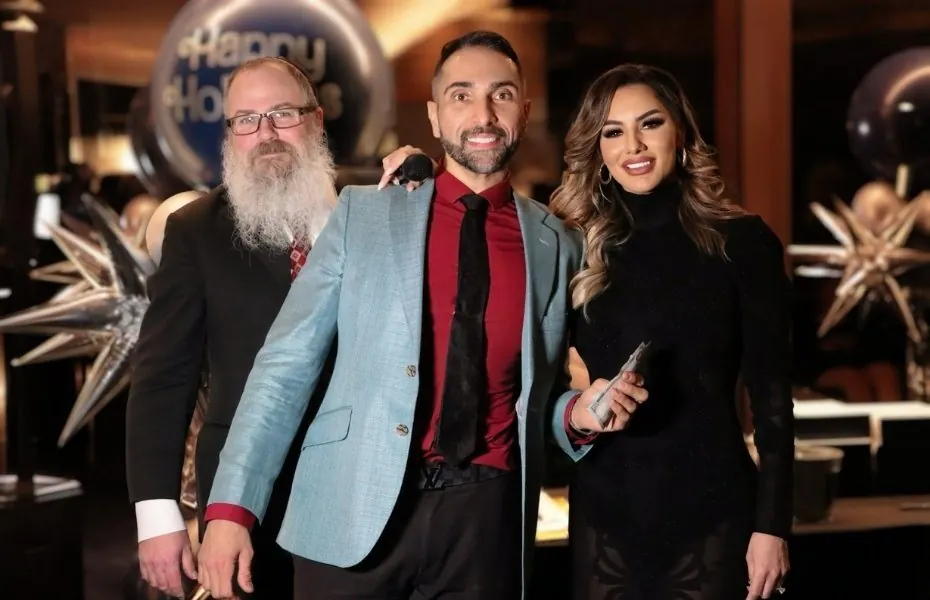
The social registerAdam Kutner’s holiday party, Red Rock Casino. In this market, a law firm’s brand is also built in rooms like this, photographed properly, or not at all. Photo: Royilda Medina.
From the Bench · In Their Own Words
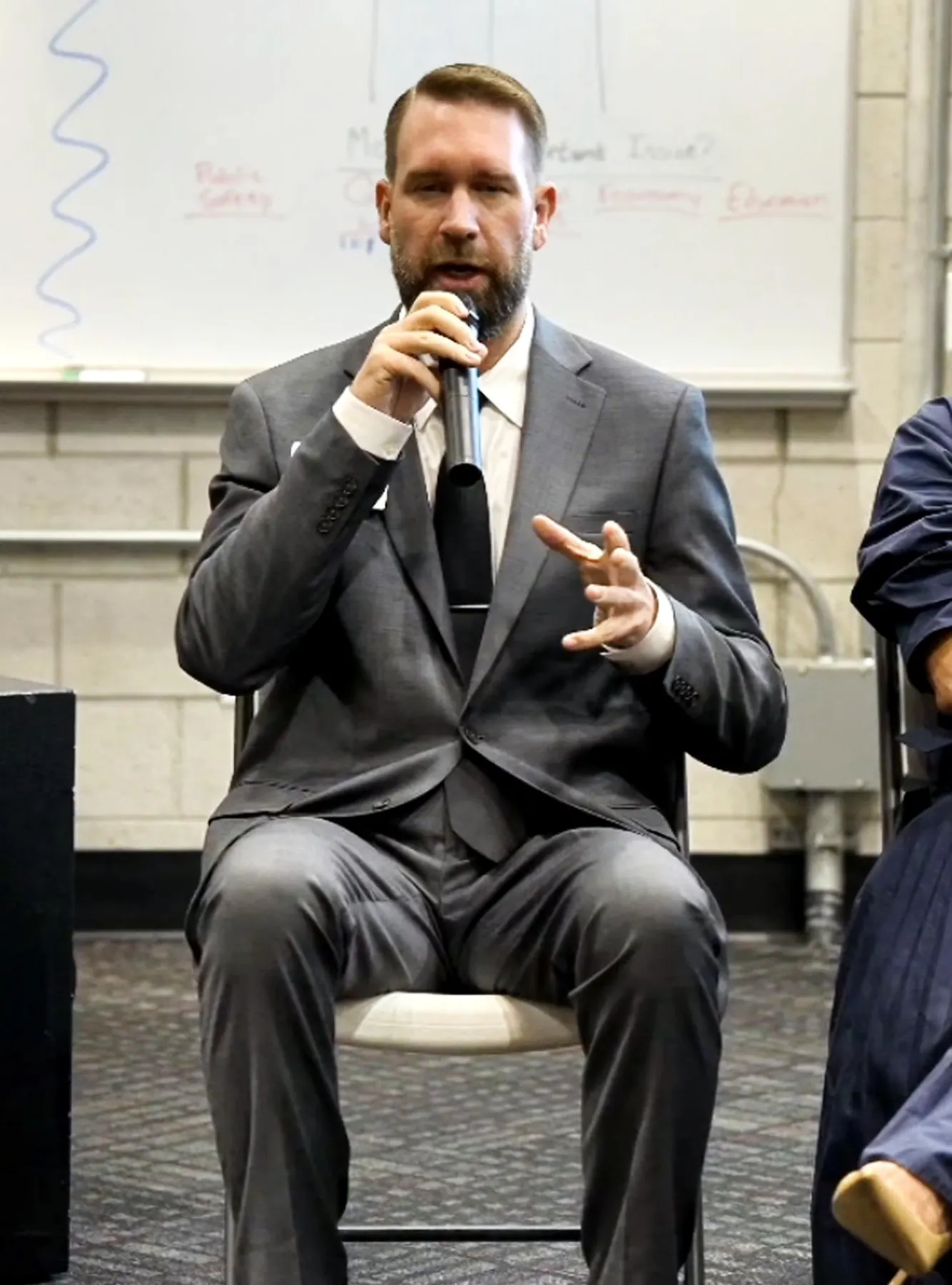
Austin BeaumontSpeaking at the District Court panel, Across the Aisle Vol. 5, UNLV. Frame from the forum livestream.
“The two most important things you can do as a judge is follow the law and exercise your discretion well.”
Austin Beaumont, Candidate, District Court Dept. 8 · former hotel executive turned prosecutor & trial attorney
“I firmly believe in having broad partisan support, and I am supported by people on both sides of the aisle.”
Judge Jacob Reynolds, Sitting Judge, District Court Dept. 29
From the Bench · The AI-Fake Question
The Municipal Court panel was asked what a judge does when someone claims a recording of theirs is an AI fake. Two answers, from the bench and from the defense table:
“As judges we are limited to what’s being presented by the parties.”
Judge Matt Walker, Sitting Judge, Municipal Court Dept. 1
Amanda Pellizzari, an 18-year criminal defense attorney running for Municipal Court Department 1, went to the burden of proof:
“They have to authenticate the video. They have to prove that the video is in fact what it says that it is.”
“Burden is never on the defendant.”
From the Across the Aisle Vol. 5 forum, UNLV, Oct. 22, 2026. Informational only. Featuring a speaker does not imply GZLV endorsement.
The Craft · Photography
Behind the Lens
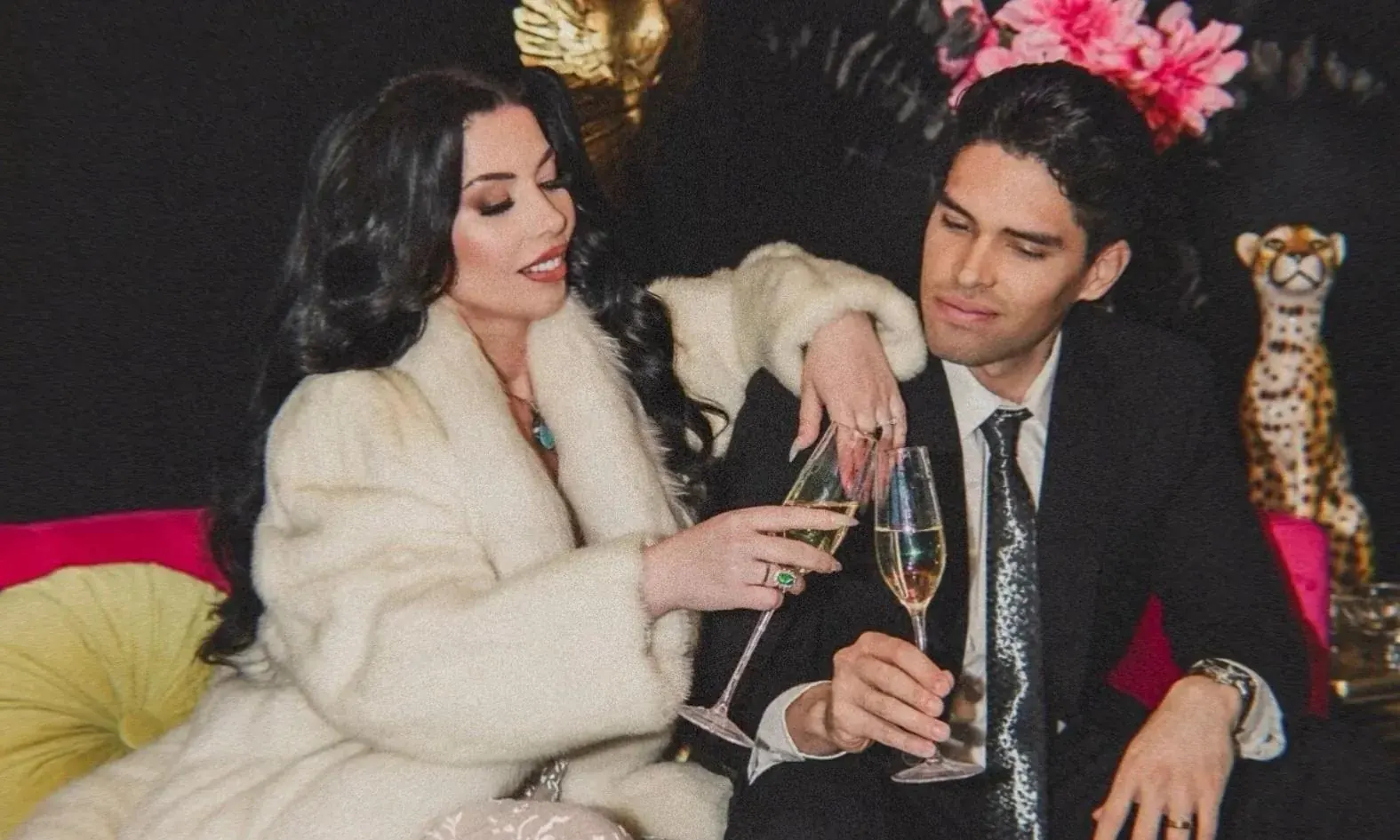
Half the images in this issue passed through one camera first. Royilda & Co., “Luxury Visuals · Branding · Fine Art Photography”, is the house’s eye, and its founder’s story is one of faith, grit, and an uncompromising sense of how people deserve to be seen.
The Craft · Royilda & Co.
Faith, grit, and
creative vision.
Every luxury sitting in this issue, the Collective’s cover portrait, the Mercedes rooftop plates, the law firms’ evenings, the couture sessions, was lit, directed and finished by the same studio: Royilda & Co., the photography practice of Royilda Medina.
The studio’s published positioning is precise about its market: “Luxury Visuals · Branding · Fine Art Photography — high-end content for brands and executives.” Las Vegas–based, followed by a loyal audience at @royilda.co, working from royilda.com. But positioning is not the story. The story, as Royilda tells it in her own account of building the company, is in the title she gave it: how faith, grit, and creative vision built Royilda & Co., a practice assembled shoot by shoot, client by client, in a city that does not hand anyone a reputation.
Watch the work and a signature emerges. Subjects are lit like principals, never props. Settings are chosen to subtract. And between the composed frames, she keeps the other kind. The photograph that opens this feature is one of those: the cover of her own account of building the company, Royilda in a white fur coat with Marlon beside her, the two of them mid-toast, champagne raised. It is not a client frame at all. It is the founder photographed the way her studio photographs everyone else, as a principal, at ease, in a room arranged around the people in it. Luxury clients can buy lighting anywhere. What they come back for is the atmosphere that produces both kinds of photograph in the same afternoon.
Within the GMS network, Royilda & Co. is the female-led perspective the house was built to include, the branding and photography arm alongside strategy, production and communications. It is also, not incidentally, why this magazine can credibly be a visual publication: the archive already existed. We simply had to print it.
Read the full story, “How Faith, Grit, and Creative Vision Built Royilda & Co.”, at thegoldenmedina.com.
Subjects are lit like principals, never props.
Where to see itThe cover sitting, the couture sessions and the wedding details in this issue all follow the rule.
The Craft · Royilda & Co., In Detail
In Detail: The Ring Shot
Ask a wedding photographer which frame a couple will still be studying in fifty years and it is rarely the wide shot. It is the detail, shot close enough to take apart. From Zach & Victoria’s wedding at Paiute Golf Resort, photographed by Royilda Medina, here is the anatomy of one.
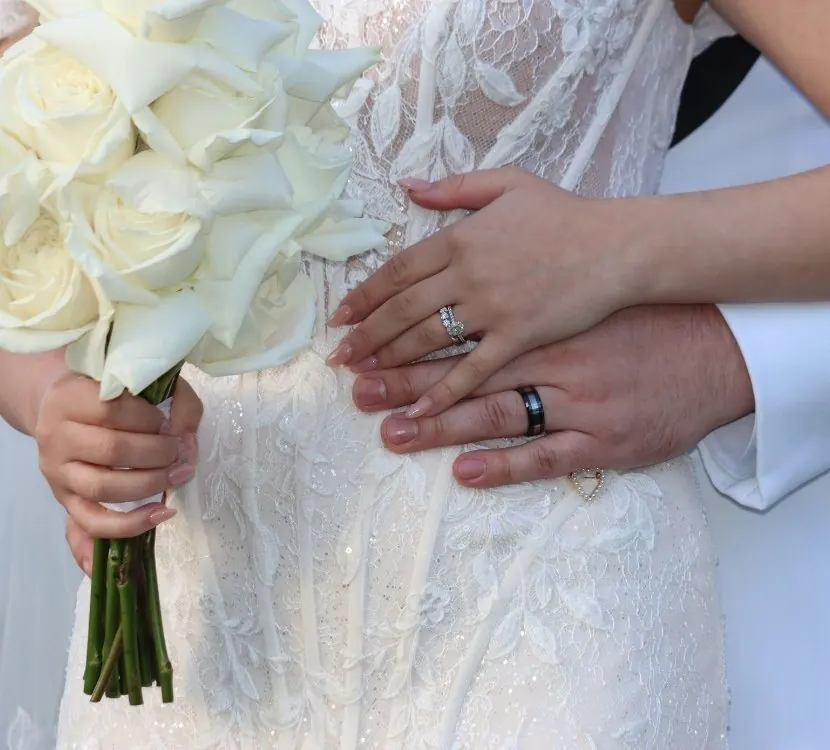
The ring shotZach & Victoria, Paiute Golf Resort, Las Vegas. Photograph © Royilda Medina.
01 · THE HANDS Layered, hers resting over his at the waist, so both bands land in a single focal plane. In a detail frame, nothing is posed by accident. The embrace is arranged so the jewelry can be read.
02 · THE RINGS A pavé-set diamond against a matte black band. The contrast is the composition: light stone, dark metal, her hand, his hand, the whole marriage, stated in materials.
03 · THE LACE Floral appliqué over illusion tulle, the gown’s structure running in vertical seams beneath it. Shot this close, the dress stops being an outfit and becomes textile architecture, pattern, layer, load-bearing line.
04 · THE BOUQUET White roses held at the frame’s edge do double duty: subject, and the photograph’s soft white balance. Every tone in the frame is a variation on the bouquet.

The veil, beforeLace-edged tulle over satin in the bridal suite: the beauty shot before the ceremony. The mirror doubles the subject, so the preparation gets a portrait too.
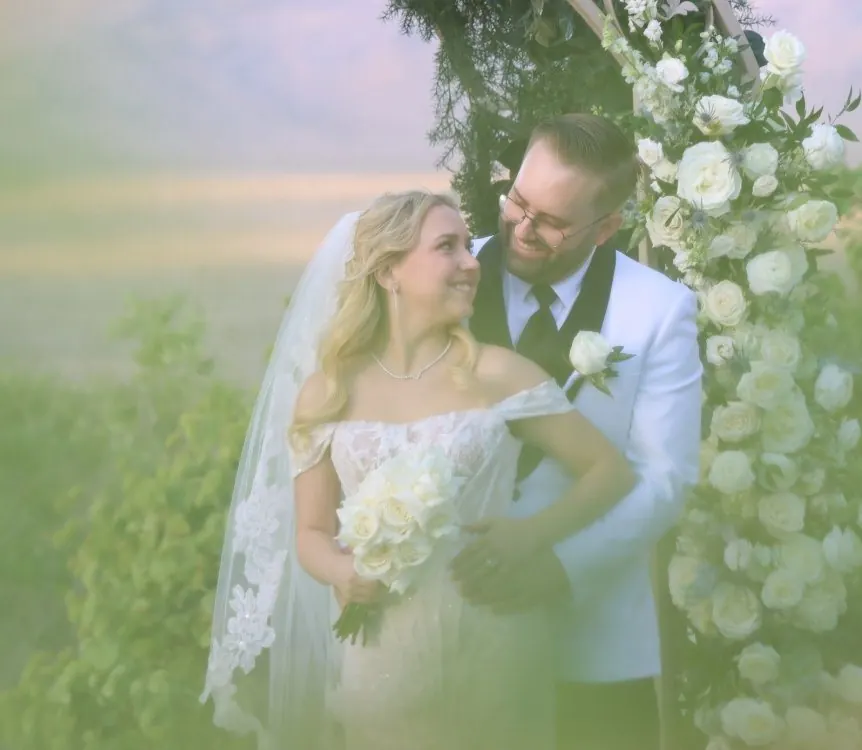
The setting as structureA floral arch of white roses, with desert and mountains soft behind it. The couple stands inside the arch, not in front of it.
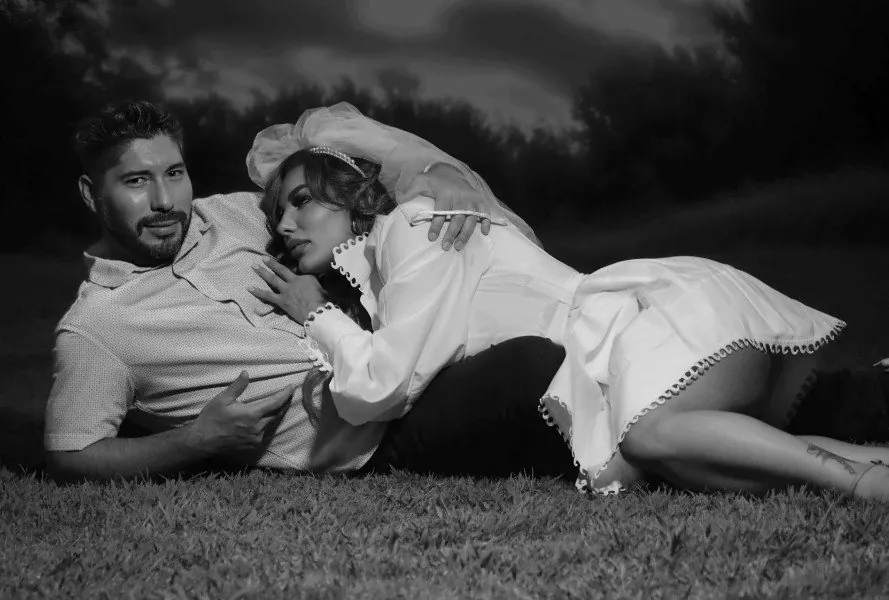
The second registerVenessa’s Moonlit Wedding Shoot, in black and white: without color, the scalloped hems and the pearl headpiece read as pattern. Directed & photographed by Royilda Medina.
Wedding frames, the house archive at thegoldenmedina.com · Zach & Victoria Wedding Shoot (Paiute Golf Resort) · Venessa’s Moonlit Wedding Shoot
The Research Desk · Field Study
Heritage Study
Sacred Space, Memory, and Identity, Volume I: Germany · The Balkans.
What do we preserve? Who do we trust? How do the stories we tell influence the institutions we build? Those three questions organize Heritage Study, a comparative field study of sacred architecture, iconography and cultural memory across four countries, and, not incidentally, they organize most of what this magazine does, whether the subject is a cathedral or a courtroom recording.
The study moves through four distinct conditions of continuity. In Germany, it examines institutional continuity: sacred buildings maintained by structures of state and church that have survived, and been revised by, eight centuries of rupture. In Kosovo, it finds living devotional continuity: medieval sacred sites still in active use, their meaning carried as much by practice as by preservation law.
In North Macedonia, the subject is reconstructed national continuity: heritage deliberately rebuilt and re-narrated as an act of statecraft, where the question of what is authentic becomes inseparable from the question of who is telling the story. And in Albania, after one of the twentieth century’s most thorough attempts to abolish religion outright, it documents survival and re-emergence: sacred space returning, sometimes literally, from ruin.
Thirty-eight original figures, photographed and documented in the field in December 2025, carry the argument visually, as this magazine believes arguments should be carried. Four of them are printed on the following page, under the study’s own captions. The full volume, with its complete apparatus, is published and citable; this excerpt is an invitation, not a substitute.
Heritage Study and the full research catalogue, marlonmedina.com/research-publications

From the Bookshelf
Behind Closed Doors: The Truth About Abuse, the publisher’s book on abuse, manipulation, and institutional silence: a family’s survival story, a brother’s fight to protect, and a guide to breaking free from hidden predators. Available in paperback, hardcover and Kindle, with the audio edition on Spotify. The research desk and the advocacy are the same desk: institutions are judged by what they protect and what they conceal.
Behind Closed Doors: The Truth About Abuse · The book and its editions, marlonmedina.com/books
The Research Desk · Heritage Study, Selected Figures
Sacred Space, In the Field
Four of the study’s 38 original figures, printed under the study’s own captions, the architecture doing the arguing: a dome, a minaret, a threshold, and a church set into a cliff.
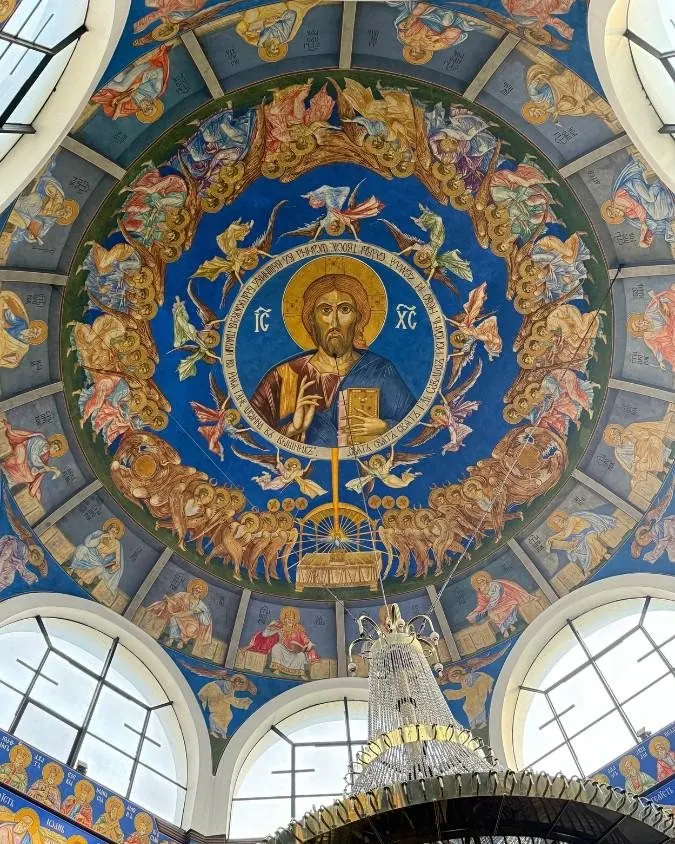
Figure 13 · North MacedoniaDome Interior with Christ Pantocrator, Church of Saint Clement of Ohrid, Skopje, rendered in the canonical Byzantine iconographic style. Referenced in Mode 2: Iconographic Continuity, “Persistence of Orthodox Visual Language.”
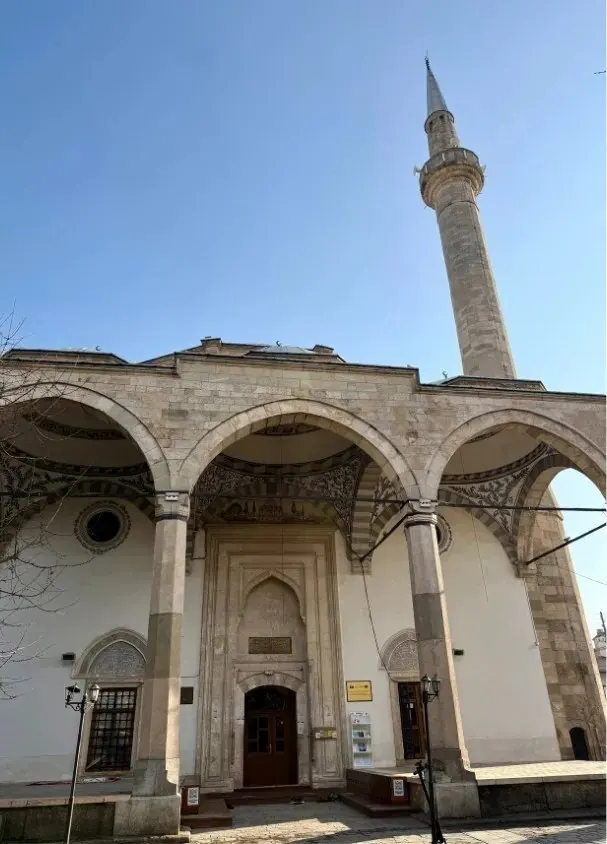
Figure 9 · KosovoExterior view of the mosque and minaret, Ibrahim Lutfiu Road, Pristina: Ottoman-era, adjacent to the Islamic Council of Kosovo, a single minaret, arched portico, restrained stone construction. Mode 3: Sacred Space and Political Disruption.
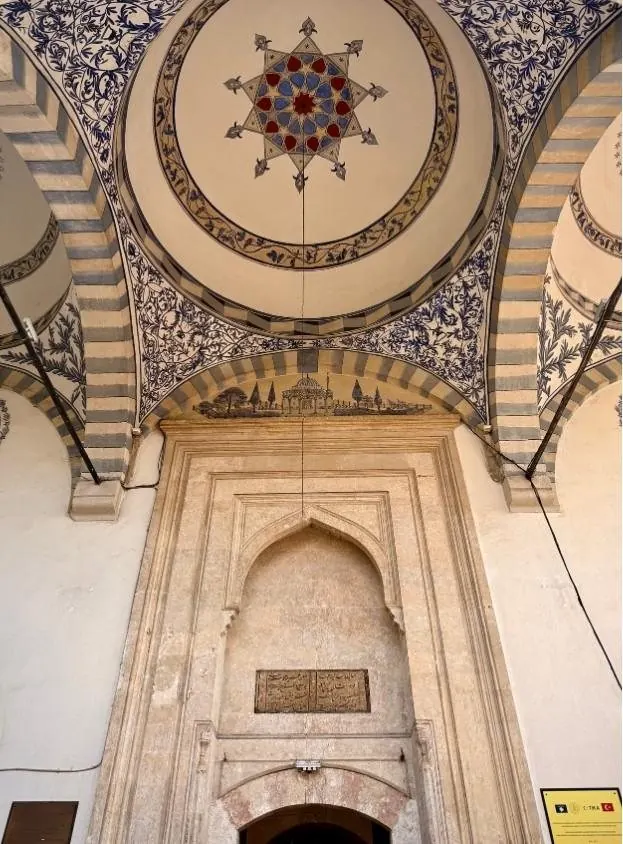
Figure 10 · KosovoEntrance portal and muqarnas-influenced arch, Pristina: the main entrance, framed by a pointed arch and shallow relief, transitions visitors from the civic exterior into sacred space. Mode 3: “Thresholds, Restoration, and Religious Reemergence.”
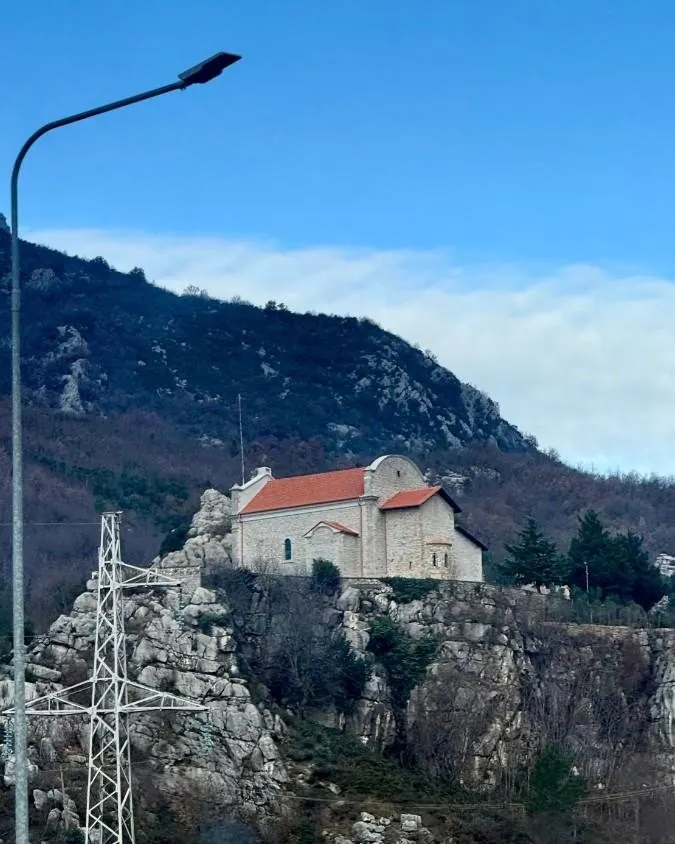
Figure 25 · AlbaniaKisha e Manastirit të Rubikut (Church of the Rubik Monastery), Rubik, northern Albania. Its isolation and elevation reflect both spiritual aspiration and historical necessity. Referenced in Mode 1: Institutional Continuity, “Peripheral Sacred Persistence.”
The evidenceArchitecture is the study’s primary evidence: buildings outlast the regimes that rename the square around them. The dome, the minaret and the cliff church are still standing where the fieldwork found them.
Read as a set, the four frames trace the study’s method in miniature: begin with what is there, material, light, placement, and let continuity, in whichever of its four forms, announce itself.
Figures, Heritage Study · Full figure set, heritagestudy.org/figures · Study DOI 10.5281/zenodo.21451209
Civics · The Forum
Across the Aisle
Judicial elections are the strangest races in American democracy: the offices with the most direct power over ordinary lives are the ones voters know least about. Candidates for the bench cannot campaign like legislators, the judicial canon forbids promising outcomes, so voters routinely reach the judicial section of the ballot essentially blind.
That is the gap the Gen Z Coalition of Las Vegas built its Across the Aisle forums to close. At Vol. 5, held at UNLV on October 22, 2026, panels of candidates, Municipal Court, District Court, Family Court and more, answered questions in the same room, under the same rules, in front of the voters who will live under their rulings. Department 30 candidate Josh Santeramo made the case plainly in his remarks: forums like this one matter precisely because judicial races are the contests voters otherwise reach blind.
The forums’ standard showed most plainly in the District Court panel, where a candidate for the bench stated the job itself in a single sentence:
Austin Beaumont, candidate, District Court Dept. 8, at Across the Aisle Vol. 5. No promise, no performance: the law first, and judgment exercised well inside it. It is the standard every panel that evening was measured against.
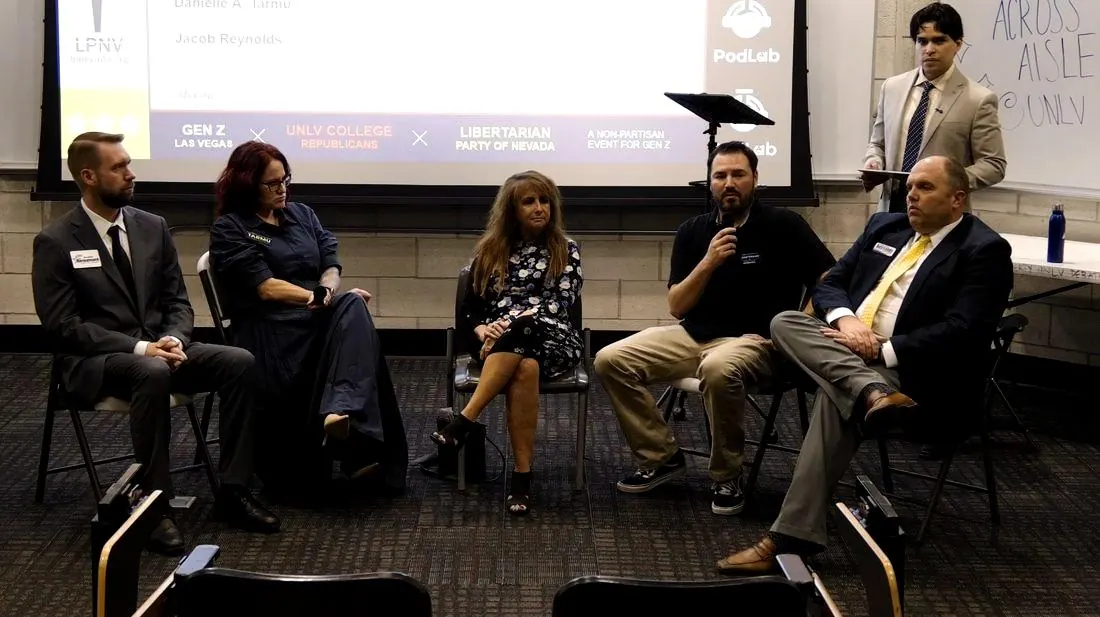
The District Court panelAcross the Aisle Vol. 5, UNLV. Frame from the forum livestream, as posted by the Gen Z Coalition of Las Vegas.
Our essay “Gen Z and Nevada’s 2026 Election” (gzlv.org) argues the generation now inheriting these institutions is not apathetic, it is unconvinced, which is a different and more fixable problem. The forums are one answer. This department will keep reporting the others.
Informational only. Featuring a speaker does not imply GZLV endorsement.
Civics · In Pictures
The Conversation, In Pictures
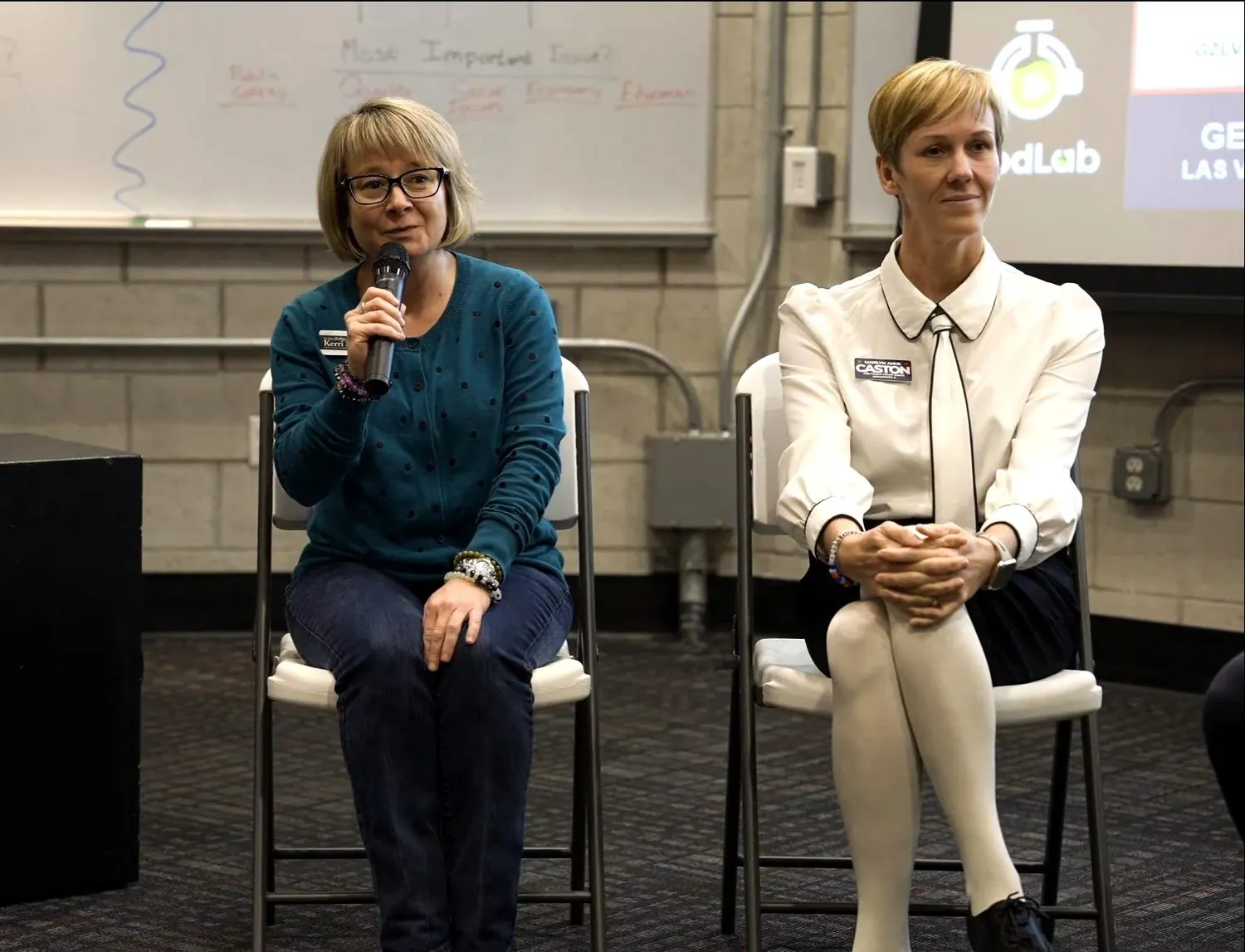
The Family Court panelAcross the Aisle Vol. 5, UNLV: the panel behind this issue’s Family Court reporting, and its two-word summary for families in crisis, “it can’t wait.” Frame from the forum livestream.
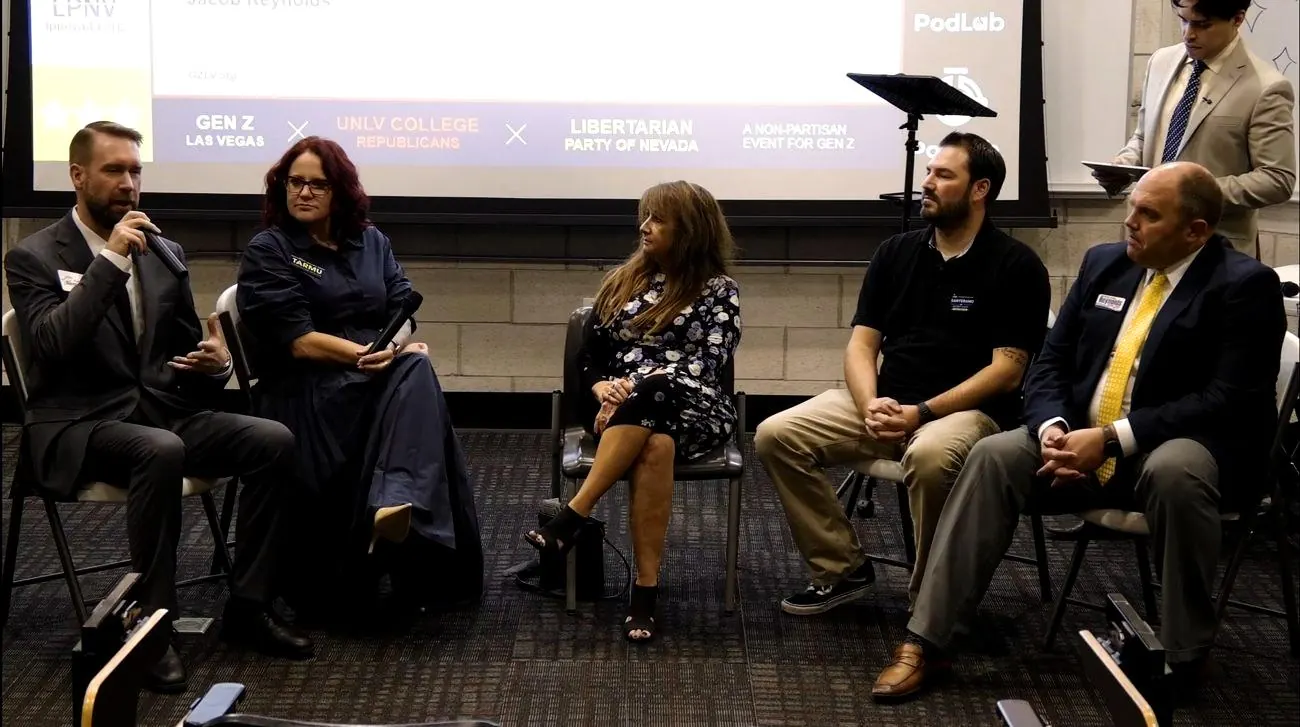
The District Court panelA second frame from the same stream: five seats, one moderator, and a screen that says what the evening was, a non-partisan event for Gen Z.
Forum coverage, gzlv.org · Debate report, blog.marlonmedina.com
21 candidates.
One room.
Nonpartisan. The audience decides.
The forumTwenty-one candidates took part in Across the Aisle Vol. 5, tagged and seated by panel, from county services to the courts, at UNLV.
A note on method: these frames are stills from the Vol. 5 livestream itself, and the bench voices in this issue were checked against that recording’s transcript, the stream also posted to Facebook. Where the transcript gave us exact words, we set quotation marks. Everywhere else, we paraphrased, and said so.
The Twenty-One, By Panel
Municipal CourtAmanda Pellizzari, Jessica Green, Judge Matt Walker.
Education & the RegentsStephanie Molina, Patrick Villa.
Federal & StateRafael Arroyo, Bobby Khan.
AssemblyKamilah Bywaters, Gage Beck, Ty Galvin.
County ServicesLynn Marie Goya, Steven Borella, Howell Shaw.
Public FundsTya Mathis-Coleman.
District CourtDanielle Tarmu, Judge Jacob Reynolds, Josh Santeramo, Judge Joanna Kishner, Austin Beaumont.
Family CourtJudge Carrie Maxey, Marilyn Caston.
Informational only. Featuring a speaker does not imply GZLV endorsement.
The Portfolio · Selected Work
Selected Work
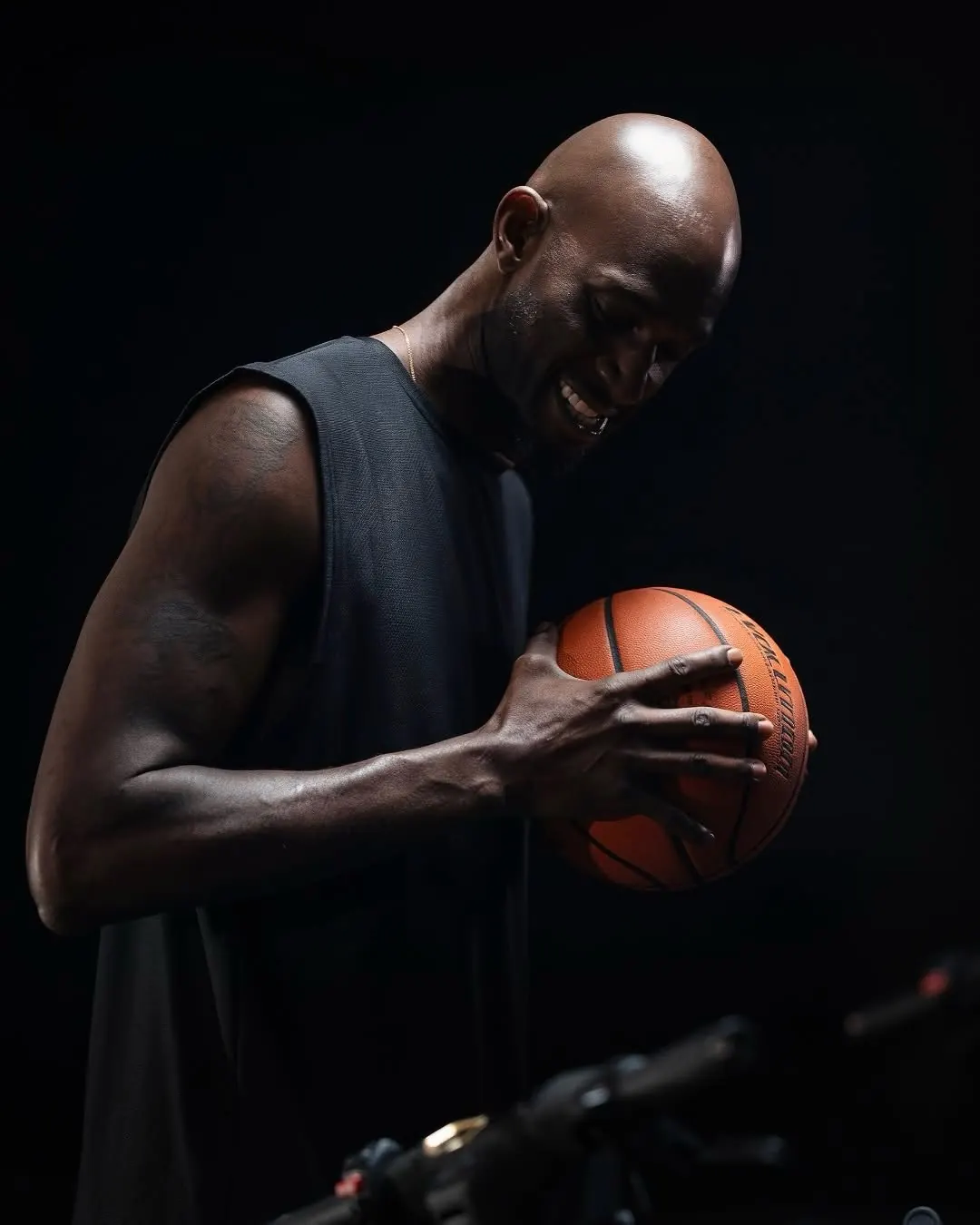
NBA Hall of Famer Kevin Garnett in a GMS-directed production session: the commercial for NAVEE, the electric mobility brand, photographed dark and cinematic. What the frame actually holds is his expression: cool confidence, a man completely settled, ready to jump into action the instant he is called. The spreads that follow gather GMS production across sports, gaming, hospitality, homebuilding and nonprofit work.
Selected Work · On Location
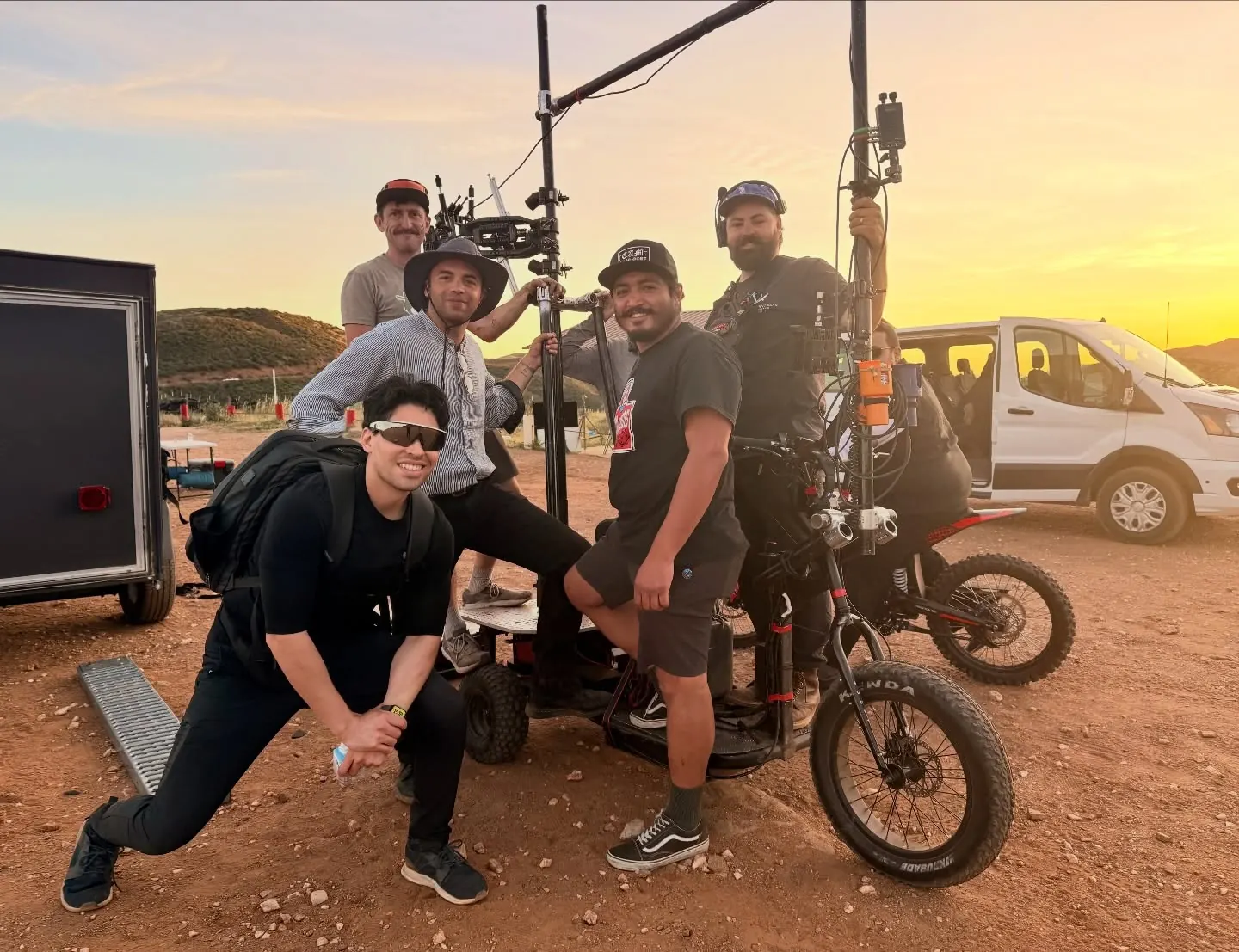
After the wrapThe end of a twelve-plus-hour day in the hills of the Santa Clarita area, California: the crew of the NAVEE commercial with Kevin Garnett, Marlon A. Medina (in black, wearing glasses) among them, GMS and local California crew who came together to make the production possible. The dirt bike at the back of the frame is the product, NAVEE’s electric bike. The same session produced the opener’s frames.
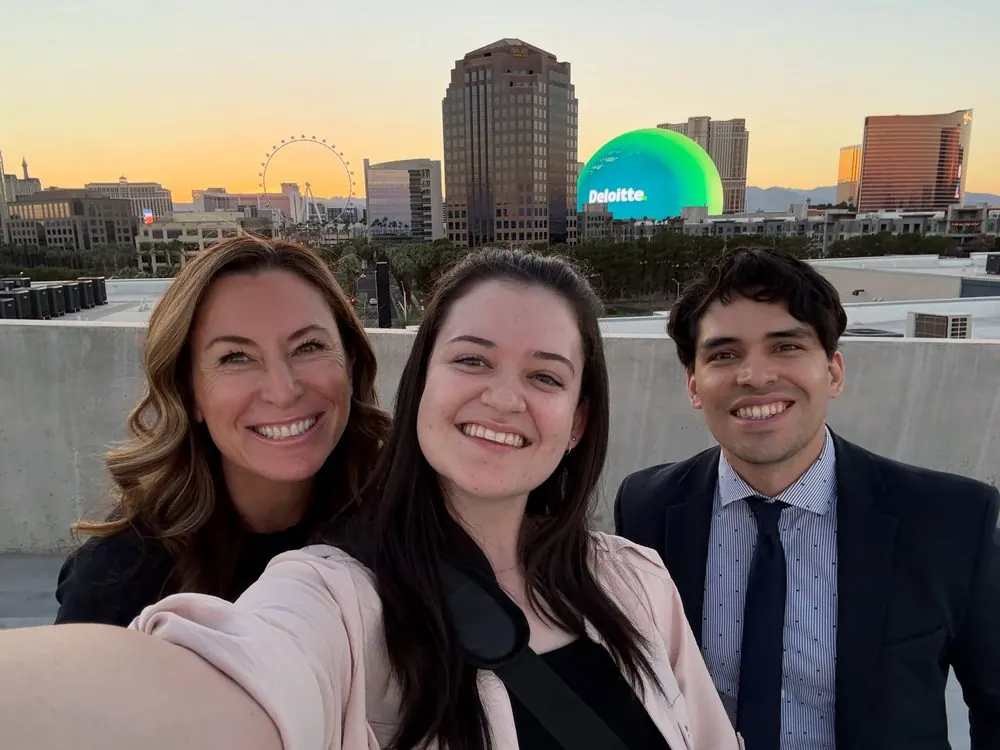
The studio rooftopLeft to right: client Alexis Michaud; Enessa Ossa, GMS team member and Fox 5 video editor; and Marlon A. Medina, on the rooftop of the GMS content studio, just after wrapping a comprehensive interview with Alexis about her background in tech, as an attorney, and her move into real estate.
Photographs, @goldenmedinaservices production archive
Selected Work · Sports & Gaming

LaMelo Ball × Dunk City DynastyGMS served as lead production partner for this holiday campaign for the NBA & NBPA-licensed 3v3 streetball game, shot in Charlotte with a virtual village for overseas stakeholders.

Jordan Clarkson × Dunk City DynastyFull-service production in Salt Lake City for the same licensed 3v3 streetball game: multi-angle camera, lighting, and a livestreamed video village so remote decision-makers could follow the shoot in real time.
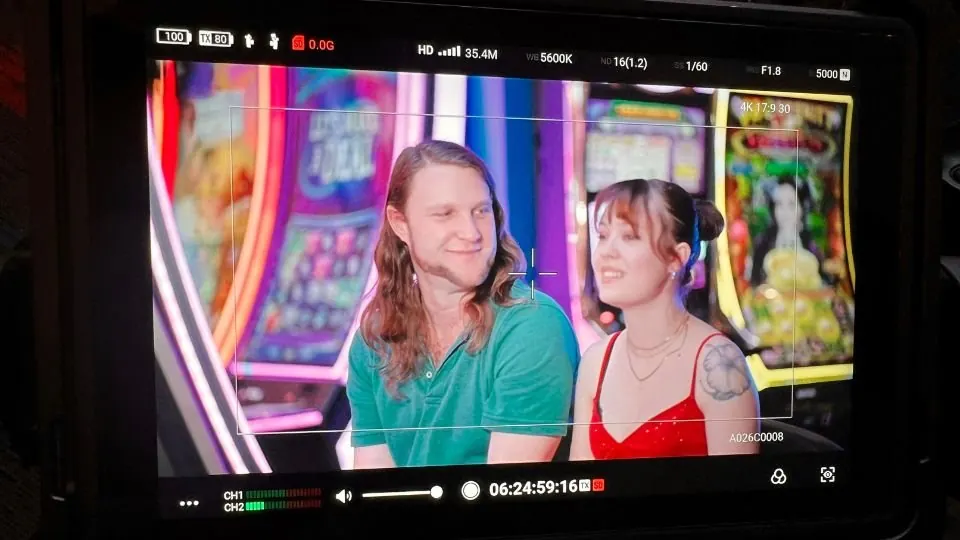
SpinX Games × IGTLas Vegas: a commercial library for licensed casino-style mobile games, more than 30 slot themes, full casting and direction, shot in 4K across multiple formats, from demo displays to social verticals.
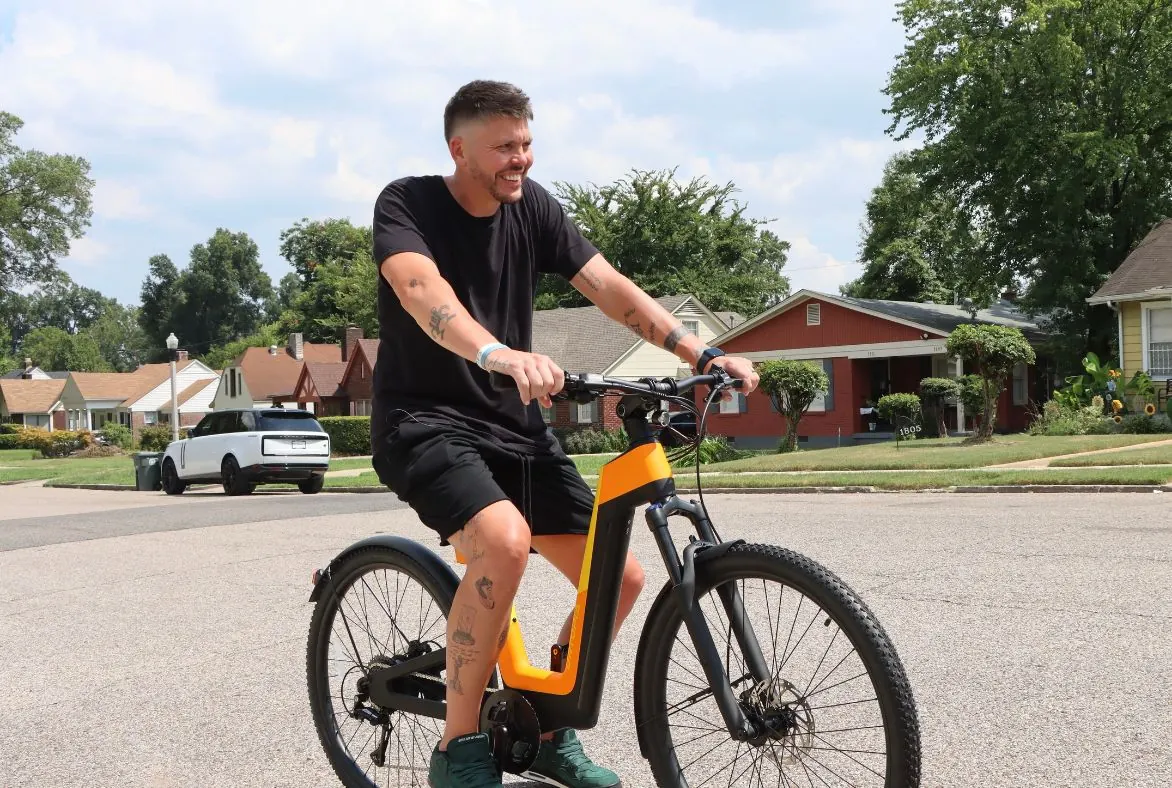
Mike Miller × Aivela & UrtopiaMemphis: branded content for the Aivela smart ring and the AI-powered Urtopia e-bike. The shoot opened with Miller holding his two NBA championship rings, then setting them down and putting on the smart ring.
Selected Work · Hospitality, Home & Heart
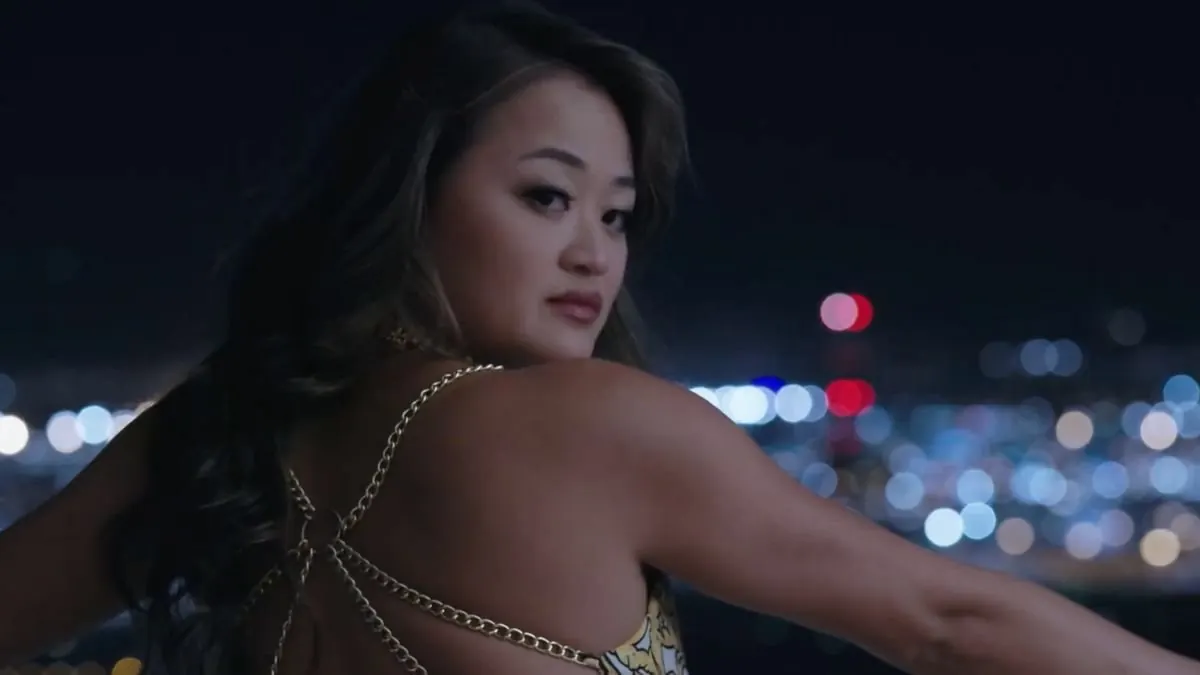
MGM SignatureLifestyle campaign for The Signature at MGM Grand: a cinematic commercial anchored by actress Priscilla Moy, plus mobile-first lifestyle content for ongoing social use.
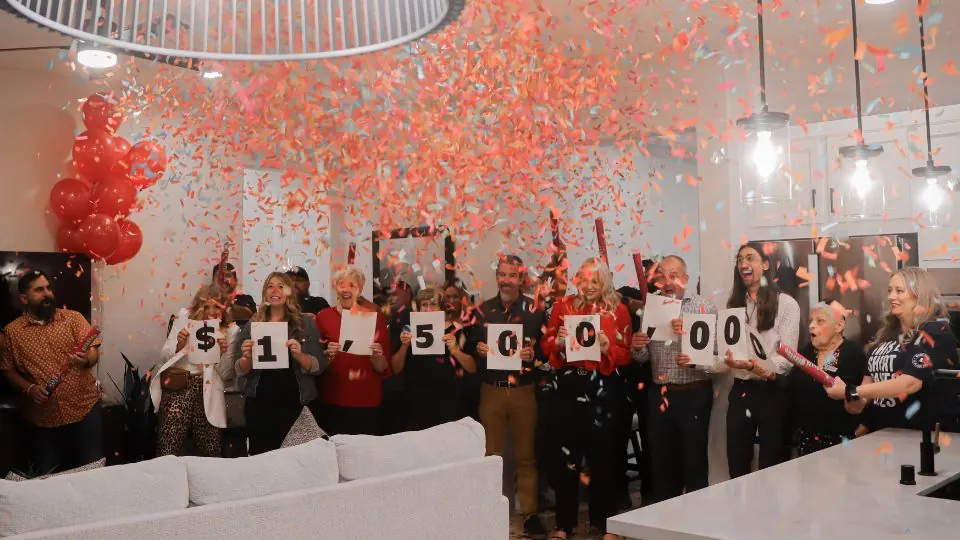
St. Jude Dream HomeCoverage of Woodside Homes’ annual St. Jude Dream Home Giveaway in Las Vegas, filmed inside the home itself, through the winner announcement and leadership interviews.
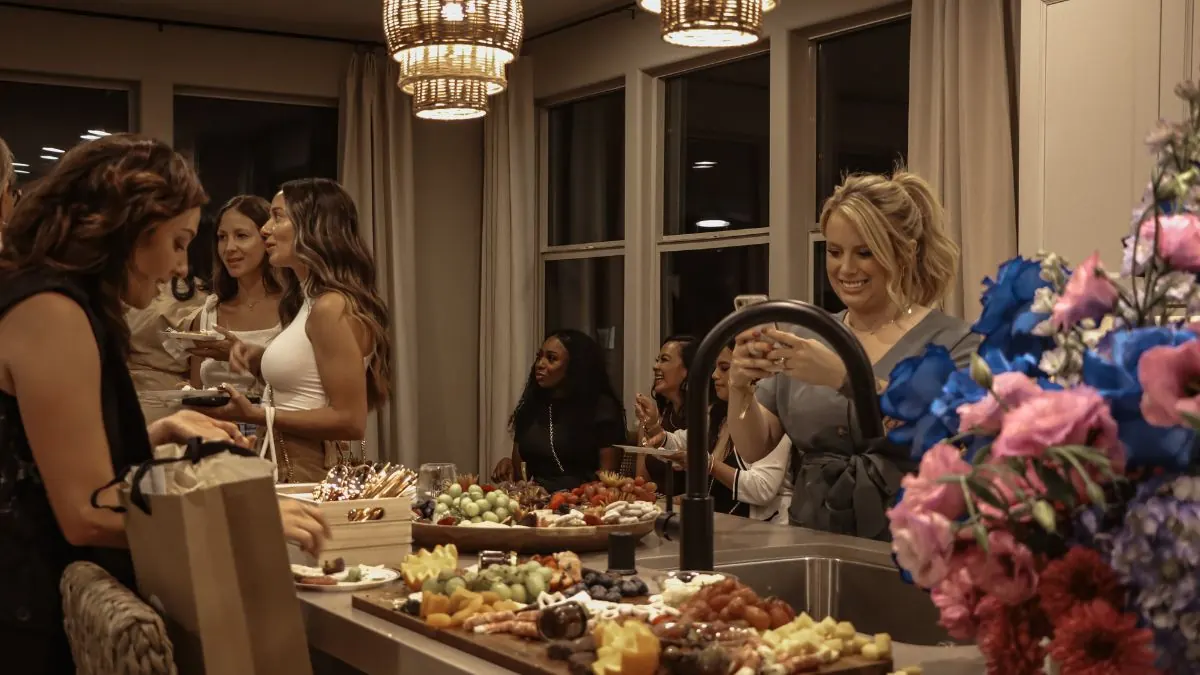
Woodside Homes, ObsidianThe grand opening of Obsidian, Woodside’s modern Summerlin community: home tours and lifestyle coverage produced to build buzz across social platforms.
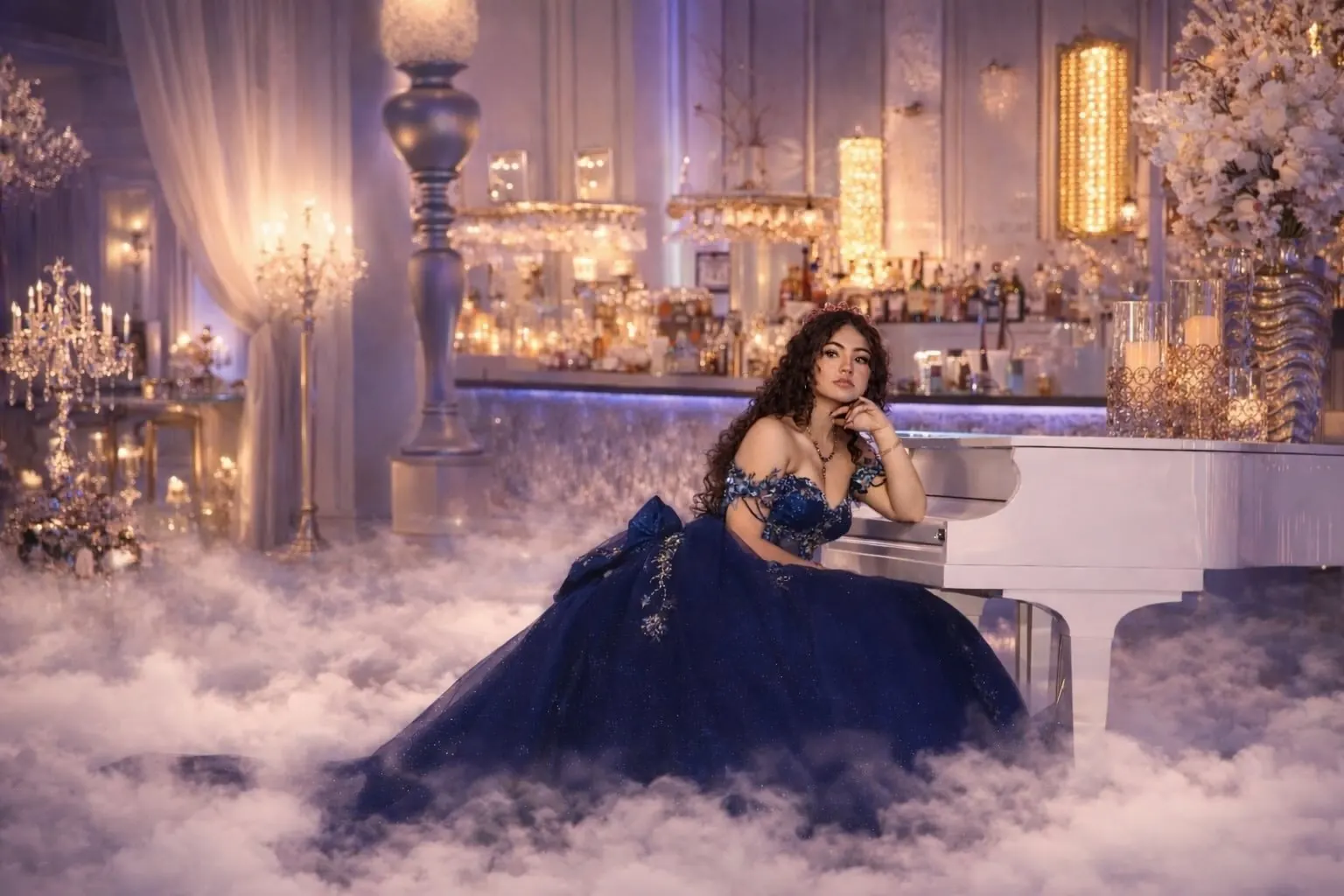
A quinceañera, cinematicallyA full-scale production: more than 10 hours on site, multiple locations across Las Vegas, two-camera cinematic video and parallel photography. A Golden Medina Services / Royilda & Co. production.

Arellano Real EstateA luxury group shoot at the GMS Partners facility: magazine-style group portraits, leader portraits, and polished headshots for all 11 agents.

Xevant × MercerA high-touch executive outreach activation in Las Vegas marking Xevant’s strategic collaboration with Mercer, produced as a standalone campaign for selected prospective organizations. The image above is conceptual.
Honorable mentions: Theresa Plaisance × Aivela & Urtopia, Indianapolis, a WNBA champion filmed in her own space inside a one-hour on-camera window, lean crew, ring and e-bike staged and shot as one system. AFFL Vegas Lucky Sevens: same-day coverage of a key organized team activity, drills, sideline moments, and the full uniform reveal, players arriving by limo for the walkout. The full archive, 125+ projects, lives at thegoldenmedina.com.

The GMS Partners mark says it in four circles: separate disciplines, overlapping on purpose, brightest where they converge. One house, many crafts.
Back Page
The Network
Different strengths. Shared ambition. The Golden Standard is published by a house of connected companies, this is the house.
The full circle Christiana Usigbe was one of Reel Fleet’s earliest students and a star alumna of the program. She is now on the GMS team. Her recent credits include director of photography on the 2026 short “I Think She’s Dead” and writer-director of “Remembering Colors,” a Nevada Women’s Film Festival official selection that screened at UNLV in March 2026. BTSLV has covered her recent projects.
Golden Medina Services · 3930 Paradise Rd, Las Vegas, NV 89169
702-970-3619 · sales@gmspartners.co · gmspartners.co · thegoldenmedina.com
The Golden Standard · Issue 01, Fall 2026
Issue 02 arrives next quarter.
© 2026 Golden Medina Services, LLC
Government: UEI DURWHABP9YM3 · NevadaEPro VEN24447